Can Glycolic Acid Really Fade Dark Spots?

A small brown spot on your cheek that wasn't there a year ago. A cluster of marks along your jaw from old breakouts. A few freckle-like spots on your nose that get darker every summer. Dark spots are one of the most common skin concerns, and also one of the most frustrating, because they can take months to fade on their own.
You've probably heard that glycolic acid can help. But does it really work on dark spots, and how long does it take? Here's an honest answer.
The Short Answer
Yes, glycolic acid can help fade dark spots, especially flat spots caused by sun exposure and old pimples. It doesn't erase them overnight, but with regular use and daily sunscreen, most people see spots lighten noticeably over 8 to 12 weeks.
It works best on:
-
Sun spots and small brown spots
-
Flat marks left after acne
-
Uneven, patchy tone on the surface of the skin
It works more slowly, or needs extra help, on:
-
Melasma and large hormonal patches
-
Very old or deep pigmentation
-
Raised or pitted scars, which aren't pigment at all
What Causes Dark Spots?
Dark spots form when your skin makes extra melanin, the pigment that gives skin its color, in one small area. Common triggers include:
-
Sun exposure: the most common cause; spots often darken in summer
-
Healing pimples: inflammation leaves a flat brown or red mark behind
-
Picking and squeezing: makes marks deeper and darker
-
Irritation: harsh scrubs, waxing or reactions to products
-
Hormones: can cause larger patches, especially on the cheeks and upper lip
How Glycolic Acid Fades Dark Spots
Glycolic acid is an AHA, or alpha hydroxy acid. It loosens the bonds that hold dead skin cells together on the surface, so they shed more easily.
Most dark spots sit in the upper layers of your skin, inside cells that are slowly moving toward the surface. By speeding up how quickly those cells shed, glycolic acid helps the darker, pigmented cells leave sooner, so fresh, more even skin takes their place.
It also smooths the surface, which helps skin reflect light evenly and makes spots look less noticeable. Dark spots are just one of its benefits. See how it helps other concerns in our guide to glycolic acid benefits by skin concern.
How to Use It for Dark Spots
-
Use it in the evening, after cleansing.
-
Pat your skin completely dry.
-
Apply a few drops to a cotton pad and sweep it over your face, focusing gently on areas with spots.
-
Avoid your eyes, lips and any broken skin.
-
Leave it on. Don't rinse.
-
Wait 3–5 minutes, then moisturize.
-
Wear SPF 50 every morning.
A leave-on glycolic acid toner for dark spots is the easiest option, because it covers the whole face evenly and stays on the skin long enough to work.
How often
|
Time |
How often |
|
Weeks 1–2 |
2 evenings a week |
|
Weeks 3–4 |
3 evenings a week, if your skin feels fine |
|
After that |
Up to 3–4 evenings a week |
Don't rush. Irritated skin can produce more pigment, which can make spots darker. For a full walkthrough, see how to use glycolic acid on your face.
Which Strength Works Best?
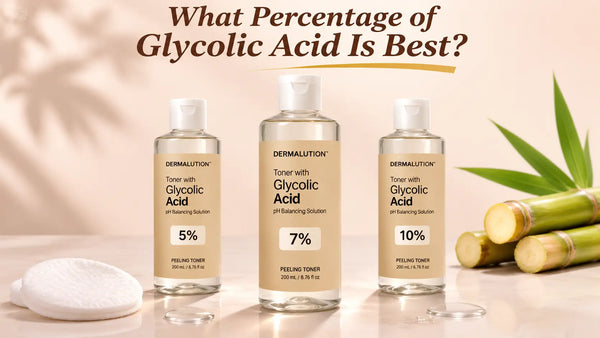
For dark spots at home, a moderate strength of around 7% is usually enough. It's strong enough to speed up cell turnover and gentle enough to use a few nights a week. Higher strengths can work faster but raise the risk of irritation, which can backfire on pigmentation.
Make It Work Faster: Pair It With These
|
Ingredient |
How it helps dark spots |
When to use |
|
Niacinamide |
Helps reduce pigment moving to the surface |
Morning, or after the toner at night |
|
Vitamin C |
Brightens and helps protect against new spots |
Morning, under sunscreen |
|
Moisturizer |
Keeps skin calm so it doesn't create new pigment |
After the toner, every time |
|
Sunscreen SPF 50 |
Stops spots from getting darker |
Every morning |
Avoid using glycolic acid on the same night as retinol or a face scrub.
Sunscreen Decides Your Results
This is the most important part. Sun is the biggest cause of dark spots, and glycolic acid also makes fresh skin more sensitive to UV.
If you use glycolic acid without sunscreen, you'll fade spots at night and darken them again during the day. Wear a broad-spectrum SPF 50 every morning, even on cloudy days and indoors near windows, and reapply if you're outside for long.
How Long Does It Take?
|
Time |
What you'll notice |
|
Weeks 1–2 |
Brighter, smoother skin overall |
|
Weeks 3–4 |
Newer spots start to look lighter |
|
Weeks 6–8 |
Most flat spots are noticeably lighter |
|
Weeks 8–12 |
A clearer, more even skin tone |
Older and darker spots take longer. Red post-acne marks often fade faster than brown ones.
Common Mistakes That Slow Results
-
Skipping sunscreen, even for a day or two
-
Using glycolic acid every night
-
Picking at spots or pimples
-
Mixing too many strong actives at once
-
Stopping after two weeks because spots haven't vanished
When Glycolic Acid Isn't Enough
See a dermatologist if:
-
Spots appear suddenly, change shape or color, or bleed
-
You have large patches that may be melasma
-
There's no improvement after three months of steady use with sunscreen
The Bottom Line
Glycolic acid does work on dark spots, especially sun spots and marks left by old pimples. It helps your skin shed darker cells faster, so fresher, more even skin comes through.
Use it a few evenings a week, pair it with niacinamide or vitamin C, moisturize every time and never skip sunscreen. Give it two to three months, and those spots will be much harder to see.
Frequently Asked Questions
Does glycolic acid remove dark spots?
It helps fade them by speeding up how fast pigmented surface cells shed. Most flat spots lighten noticeably in 8–12 weeks.
Which dark spots does glycolic acid work best on?
Sun spots and flat post-acne marks. Melasma and deep pigmentation fade more slowly.
Can I use glycolic acid on dark spots every day?
Not usually. Use it 2–4 evenings a week, with rest nights in between.
Is 7% glycolic acid enough for dark spots?
For most people, yes. Consistency and sunscreen matter more than strength.
Can glycolic acid make dark spots worse?
Only if it irritates your skin or you skip sunscreen. Start slowly and wear SPF 50 daily.
Can I use glycolic acid with vitamin C for dark spots?
Yes. Use vitamin C in the morning and glycolic acid at night.