How to Use Glycolic Acid on Your Face: A Step-by-Step Guide

In shortThe step-by-step method for applying glycolic acid, how often to use it, what not to combine it with, and six common mistakes.
Glycolic acid is simple to use and easy to overdo. The instructions on most bottles are vague enough that people either use it too often or too timidly, and both waste the product.
Here's the actual method.
Before You Start
Three things worth settling first.
Do a patch test. Apply a small amount behind the ear or on the jawline for two consecutive evenings. If there's no reaction, proceed.
Have a moisturizer ready. Not optional. Exfoliation depletes the lipids holding your barrier together, and replacing them is what makes ongoing use possible.
Have sunscreen. Glycolic acid raises UV sensitivity for several days after each use. If you don't already wear SPF daily, buy it before you buy the acid in that order.
The Method
1. Cleanse and dry your face
Use a gentle cleanser, then pat dry. Dry matters. Damp skin absorbs acid faster and increases stinging wait a minute or two if you've just washed.
2. Apply to a cotton pad
Enough to dampen the pad, not soak it. A pad dripping with product doesn't work better; it just runs into your eyes.
3. Sweep across face and neck
Upward strokes, light pressure. Cover the whole face evenly rather than targeting specific spots patchy application gives patchy results.
Avoid: the immediate eye area, the corners of the nose and mouth, and any broken or irritated skin. Don't forget the neck, where texture and pigmentation show early.
4. Wait 3–5 minutes
The acid needs contact time before you layer anything on top. A mild tingle during this window is normal; burning is not.
5. Moisturize
Apply your moisturizer while skin is still slightly damp. A ceramide-based one is ideal here, since ceramides are exactly what exfoliation depletes.
6. Sunscreen the next morning
Every morning, without exception, for as long as you're using the acid.
How Often the Part People Get Wrong
Not nightly. Not every other night to begin with.
| Stage | Frequency |
|---|---|
| Weeks 1–2 | Two evenings a week |
| Weeks 3–4 | Three, if your skin has stayed comfortable |
| Month 2 onwards | Three or four this is the ceiling |
There's no version of this where daily use gives faster results. It gives irritation, and irritated skin looks worse than untreated skin redder, more reactive, and in the case of pigmentation, actually darker.
The rest nights aren't wasted. That's when the barrier rebuilds, which is what lets you keep going for months rather than weeks.
Where It Fits in Your Routine
On acid evenings: cleanse → glycolic acid → wait 3–5 minutes → moisturizer
On other evenings: cleanse → serum if you use one → moisturizer
Every morning: cleanse → serum → moisturizer → sunscreen
Glycolic acid is an evening product. It degrades in light and raises sun sensitivity, so there's no good reason to use it in the morning.
What Not to Combine It With
| Product | Verdict |
|---|---|
| Retinol | Never the same night. Alternate them. |
| Physical scrub | Not on the same day — pick one form of exfoliation |
| Vitamin C | Morning only, acid at night |
| Another AHA or BHA leave-on | Too much at once |
| Niacinamide | Fine morning is easiest, and it buffers irritation |
| Hyaluronic acid | Fine apply after the acid, before moisturizer |
A salicylic acid cleanser is the exception among acids because it rinses off, it doesn't conflict with a leave-on glycolic toner applied afterwards.
Six Common Mistakes
- Applying to damp skin. Increases absorption and stinging. Dry first.
- Skipping moisturizer because your skin is oily. Exfoliated skin needs barrier support regardless of type.
- Using it every night in week one. The single most common reason people quit.
- Spot-treating. It's a resurfacing product, not a spot treatment. Even coverage.
- Skipping sunscreen. Undoes the work and can worsen pigmentation.
- Adding a scrub to speed things up. That's over-exfoliation, and it shows within a fortnight.
What You Should Notice, and When
| Timeline | What happens |
|---|---|
| Week 1 | Skin feels smoother to the touch |
| Week 2 | Visible brightness complexion looks less flat |
| Weeks 2–3 | Texture refining, dark spots beginning to lift |
| Week 4+ | Consistently clearer, more even tone |
If you're seeing persistent redness, stinging or flaking instead, you're using it too often. Drop to once a week, prioritise moisturizer, and build back slowly more on that in side effects and what's normal.
What We Make
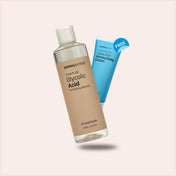
The Glycolic Acid 7% Toning Solution is a leave-on toner at 7% effective enough for visible results, below the concentration where sensitisation risk climbs. Rs. 2,000 for 250ml, which lasts around three months at the frequency above.
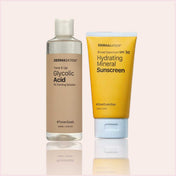
Because sunscreen isn't optional alongside it, most people are better off with the Repair & Protect Bundle the toner with SPF 50 for Rs. 3,000, less than buying both separately.
Frequently Asked Questions
How do I use glycolic acid on my face?
On clean, dry skin in the evening: apply to a cotton pad, sweep across face and neck avoiding the eye area, wait three to five minutes, then moisturize. Start at two evenings a week.
How do I use a glycolic acid toner?
Same method a toner is the standard leave-on format. Cotton pad, even coverage, moisturizer after. Don't rinse it off.
Can I use glycolic acid every day?
No. Three or four evenings a week is the maximum, and two is where you should start. Daily use causes cumulative irritation rather than faster results.
Morning or night?
Night. It degrades in light and increases UV sensitivity.
Do I rinse it off?
No. A toning solution is leave-on. Wait three to five minutes, then apply moisturizer over it.
Wet or dry skin?
Dry. Damp skin increases absorption and stinging.
Can I use it on my neck?
Yes, and you should the neck shows texture and pigmentation early and is usually neglected.
What do I apply after it?
Moisturizer. Hyaluronic acid first if you use it. Nothing else on acid nights.
Can I use glycolic acid with retinol?
Yes, but never on the same night. Alternate them across the week.
How long before I see results?
Smoother texture within a week, visible brightness by week two, and dark spots fading from around week three provided you're wearing sunscreen daily.
General information, not medical advice.
Read more: how glycolic acid works · side effects explained · for pigmentation and dark spots · shop the 7% toner