Glycolic Acid vs Hyaluronic Acid: What's the Difference?

They both have "acid" in their names, and they both show up in almost every skincare routine. But glycolic acid and hyaluronic acid do completely different jobs.
The short answer: glycolic acid exfoliates, and hyaluronic acid hydrates. One clears away dull, dead skin. The other fills your skin with moisture. And the best part? They work beautifully together.
This guide explains the difference simply, so you know which one your skin needs, or how to use both.
Quick Answer
· Choose glycolic acid if your skin looks dull, feels rough or has dark spots and acne marks.
· Choose hyaluronic acid if your skin feels tight, dry or dehydrated, or looks flat and tired.
· Use both if you want smooth, bright skin that also feels soft and comfortable.
What Is Glycolic Acid?
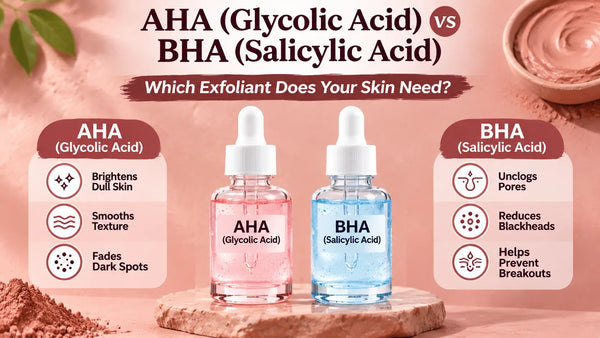
Glycolic acid is an AHA, or alpha hydroxy acid. It's an exfoliant, which means it helps remove dead skin cells from the surface.
It works by loosening the "glue" that holds those dead cells together, so they shed more easily and reveal fresher skin underneath. Of all the AHAs, it has the smallest molecules, which is why it works so visibly. Read our guide about Glycolic acid Vs salicylic acid.
What glycolic acid helps with:
· Dull, tired-looking skin
· Rough or bumpy texture
· Dark spots and post-acne marks
· Clogged-looking pores
· Uneven skin tone
What Is Hyaluronic Acid?
Despite its name, hyaluronic acid isn't an exfoliating acid at all. It doesn't peel, tingle or remove anything from your skin.
Hyaluronic acid is a hydrator. Your skin already makes it naturally, and its job is to hold on to water. When you apply it as a serum, it draws moisture into the skin and keeps it there, so skin looks plumper, smoother and more comfortable.
What hyaluronic acid helps with:
· Tight, dry or dehydrated skin
· Flat, tired-looking skin
· Fine lines caused by dryness
· Oily skin that still feels tight underneath
· Skin that feels uncomfortable after exfoliating
Glycolic Acid vs Hyaluronic Acid at a Glance
|
|
Glycolic acid |
Hyaluronic acid |
|
Type |
Exfoliant (AHA) |
Hydrator (humectant) |
|
Main job |
Removes dead skin cells |
Adds and holds moisture |
|
Best for |
Dullness, texture, dark spots |
Dryness, tightness, dehydration |
|
How it feels |
Light tingle at first |
Soothing, no tingle |
|
How often |
2–4 evenings a week |
Morning and night, every day |
|
Sun sensitivity |
Increases it; daily SPF needed |
No effect |
|
Suits |
Most skin types, used slowly |
Every skin type, including sensitive |
Which One Does Your Skin Need?
|
Your skin concern |
Best choice |
|
Skin looks dull and flat |
Glycolic acid |
|
Skin feels tight after washing |
Hyaluronic acid |
|
Rough, bumpy texture |
Glycolic acid |
|
Dry patches and flaking |
Hyaluronic acid |
|
Dark spots and acne marks |
Glycolic acid |
|
Oily but dehydrated skin |
Hyaluronic acid |
|
Dull and dry at the same time |
Both |
Can You Use Glycolic Acid and Hyaluronic Acid Together?
Yes, and this is one of the best pairings in skincare.
Glycolic acid clears away the dull top layer. That fresh skin underneath can feel a little dry or sensitive for a while. Hyaluronic acid steps in to hydrate and comfort it. The result is skin that looks bright and smooth and feels soft and healthy.
How to layer them
On glycolic acid nights:
1. Wash your face with a gentle cleanser.
2. Pat your skin completely dry.
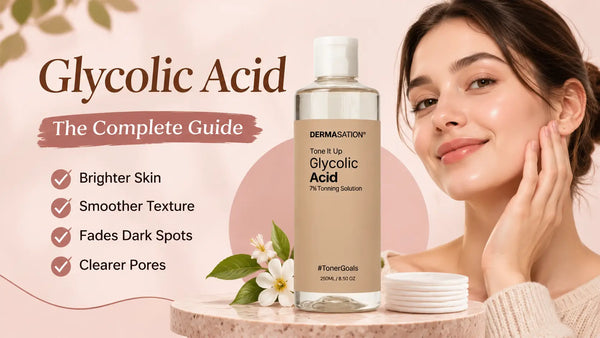
3. Apply a 7% glycolic acid toner with a cotton pad.
4. Wait 3–5 minutes.
5. Apply hyaluronic acid serum.
6. Finish with moisturizer.
Every morning:
1. Wash your face.
2. Apply hyaluronic acid serum to slightly damp skin.
3. Apply moisturizer.
4. Finish with SPF 50 sunscreen.
A Simple Weekly Routine
|
Time |
Routine |
|
Every morning |
Cleanser, hyaluronic acid serum, moisturizer, SPF 50 |
|
2–4 evenings a week |
Cleanser, glycolic acid toner, hyaluronic acid serum, moisturizer |
|
Other evenings |
Cleanser, hyaluronic acid serum, moisturizer |
Glycolic acid is used a few nights a week. Hyaluronic acid can be used every day, morning and night.
Tips for Using Hyaluronic Acid Properly
Hyaluronic acid works best with a few simple habits:
· Apply it to slightly damp skin, so it has water to hold on to
· Always follow with moisturizer to seal the hydration in
· Use 2–3 drops; more isn't better
If you're looking for a lightweight option, our hyaluronic acid serum layers easily under moisturizer and sunscreen and suits every skin type.
Tips for Using Glycolic Acid Safely
· Start with 2 evenings a week and build up slowly
· Apply it to dry skin, never wet
· Don't use it on the same night as retinol or a face scrub
· Always moisturize afterward
· Wear sunscreen every morning
A light tingle for a few seconds is normal. Burning, lasting redness or peeling means you're overdoing it. Cut back and focus on hydration for a few days.
What Results Can You Expect?
|
Time |
Glycolic acid |
Hyaluronic acid |
|
First use |
Softer feel |
Instant comfort and plumpness |
|
Weeks 1–2 |
Brighter, smoother skin |
Less tightness through the day |
|
Weeks 3–4 |
Texture refines, marks start fading |
Skin stays hydrated longer |
|
Weeks 6–8 |
More even, glowing skin |
Healthier, more comfortable skin |
The Bottom Line
Glycolic acid and hyaluronic acid aren't competitors. Glycolic acid smooths and brightens by clearing away dead skin, while hyaluronic acid keeps your skin hydrated, plump and comfortable.
Use glycolic acid a few evenings a week, hyaluronic acid every day, and sunscreen every morning. Together, they give you the best of both: skin that looks bright and feels healthy.
Explore our glycolic acid products to start building your routine.
Frequently Asked Questions
Is hyaluronic acid an exfoliant like glycolic acid?
No. Hyaluronic acid is a hydrator. It adds moisture and doesn't remove dead skin.
Can I use glycolic acid and hyaluronic acid on the same night?
Yes. Apply glycolic acid first, wait a few minutes, then apply hyaluronic acid and moisturizer.
Which comes first, glycolic acid or hyaluronic acid?
Glycolic acid first, on dry skin. Then hyaluronic acid, then moisturizer.
Can I use hyaluronic acid every day?
Yes. It's gentle enough for morning and night use.
Does hyaluronic acid reduce irritation from glycolic acid?
It helps keep skin hydrated and comfortable after exfoliating, which can make glycolic acid easier to tolerate.
Which is better for dull skin?
Glycolic acid, because it removes the dull top layer. Hyaluronic acid adds a fresh, plump look on top.