




Dark Spots
Two products that fade dark spots from opposite directions — glycolic acid clears the pigmented cells already on your skin, niacinamide slows new pigment reaching the surface. From Rs. 1,720.
Why Dark Spots Are Slow to Fade
A dark spot is melanin sitting in surface skin cells. Those cells shed on their own eventually — but slowly, and every day of unprotected sun exposure deposits more pigment in the ones underneath. That's why a spot can sit on your face for months looking exactly the same.
Fading them means doing two things at once: clearing the pigmented cells that are already there, and slowing the production of new pigment. One without the other stalls.
The Two Products
Glycolic Acid 7% Toning Solution · 250ml · Rs. 2,000
Clears pigmented surface cells · 2 to 4 evenings a week
Glycolic acid is an AHA — water-soluble, working on the skin's surface. It dissolves the bonds holding pigmented dead cells in place so they shed and reveal the fresher layer beneath.
It's the smallest AHA molecule used in skincare, which is why it penetrates faster and works more visibly than lactic or mandelic acid. At 7% it's effective without the sensitisation risk that comes with higher concentrations — and irritated skin produces more pigment, so gentler matters here.
- Fades dark spots, sun damage and post-acne marks
- Brightens dull, uneven tone
- Smooths rough texture
- 250ml — around three months at the recommended frequency
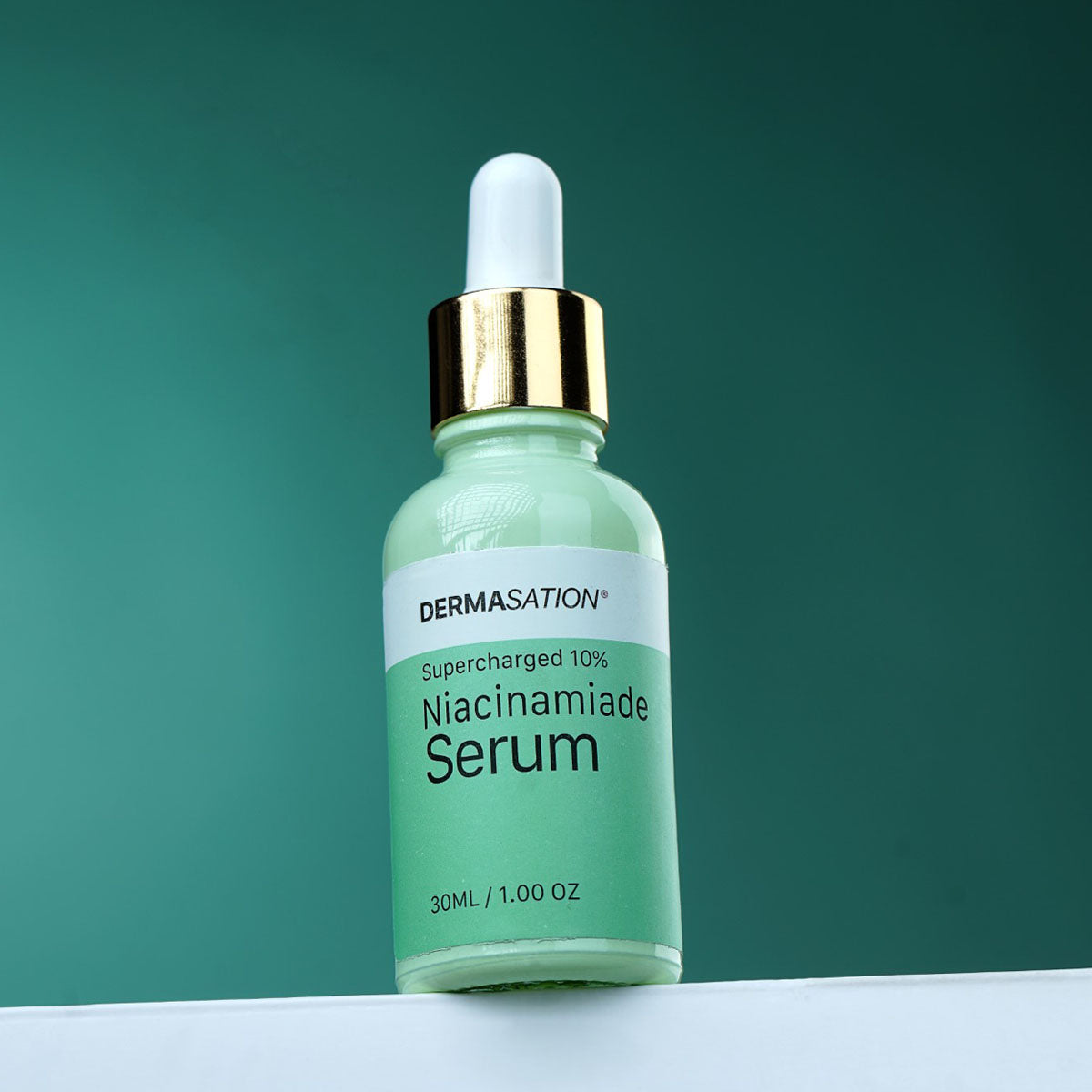
Super Charged 10% Niacinamide Serum · 30ml · Rs. 1,720
Every morning
Niacinamide interrupts the transfer of pigment from where it's produced to the surface cells where it becomes visible. So while the toner clears existing spots, this slows the next ones forming.
It's also the best tolerated active in skincare — it conflicts with almost nothing and rarely irritates, which makes it the sensible one to start with.
Sunscreen Is the Third Product
It isn't in this collection, but treating dark spots without it doesn't work.
UV is what creates the pigment in the first place. It deepens existing spots faster than glycolic acid or niacinamide can fade them — so skipping sunscreen means clearing pigment at night and generating more of it by day. Glycolic acid also increases UV sensitivity for several days after each use.
SPF 50 or SPF 70, Rs. 1,200 for 120ml. On a dark spot routine this isn't optional — it roughly halves how long fading takes.
How to Use Them
Every morning: cleanse → niacinamide → moisturizer → SPF
2–4 evenings a week: cleanse → glycolic acid toner → wait 3–5 minutes → moisturizer
Other evenings: cleanse → moisturizer
Start at two evenings a week and build to four over a month. Never nightly — over-exfoliation causes irritation, and irritated skin darkens rather than lightens.
What to Expect
| Timeline | What you'll notice |
|---|---|
| Weeks 1–2 | Smoother texture, brighter overall tone |
| Weeks 4–6 | Recent spots starting to lighten |
| Weeks 8–12 | Older spots fading, tone visibly more even |
| Month 4+ | Deeper pigmentation — the slowest to shift |
Recent marks fade faster than old ones. Anything more than a few months old takes longer, and daily sunscreen is what makes the difference.
Frequently Asked Questions
How do I remove dark spots on my face?
Exfoliate the pigmented surface cells away, slow new pigment forming, and protect from UV daily. Glycolic acid handles the first, niacinamide the second, and sunscreen the third. Missing any one of the three is why most attempts stall.
What is the best serum for dark spots?
Niacinamide at 10%, for most people — it works on pigment transfer and is gentle enough for daily use. Rs. 1,720 for 30ml. If your skin tolerates more, adding an exfoliating acid at night works faster than either alone.
How long does it take for dark spots to fade?
Recent marks lighten from around week four to six. Older or deeper pigmentation takes two to three months, sometimes longer. Consistent daily sunscreen roughly halves the time.
Do I need sunscreen for dark spots?
Yes, without exception. UV deepens pigmentation faster than any active fades it. Treating dark spots without daily SPF is the most common reason people see no progress.
Can I use the toner every night?
No — maximum four evenings a week. Over-exfoliating causes irritation, and irritation produces more pigment.
What about dark spots from acne?
Same approach — post-acne marks are pigment in surface cells, so glycolic acid and niacinamide both work on them. If you still get active breakouts, see the acne collection as well.
Will dark spots come back?
If you stop wearing sunscreen, yes. Fading them is achievable; keeping them faded is a matter of daily UV protection rather than continued treatment.
What if the spots are raised or indented?
That's textural scarring rather than pigmentation, and no over-the-counter product resolves it. These work on flat brown or grey marks.
For a fuller routine including vitamin C, a brightening cleanser and sunscreen, see the pigmentation collection.