


Cash on deliveryPay when it arrives
Free shippingOn orders over Rs. 2,000
Fast delivery2–4 working days in major cities
14-day money-backIf it doesn't suit your skin
Buying guide
About Vitamin C
Vitamin C is the only antioxidant most people need, and it works on a kind of sun damage that sunscreen doesn't stop. That's what makes it a morning product rather than an alternative to SPF.
What Vitamin C Does
Two things, and they're easy to conflate.
It neutralises free radicals. UV and pollution generate unstable molecules that damage collagen and trigger pigment production. Sunscreen filters UV before it reaches the skin, but nothing blocks 100% — vitamin C mops up the damage from what gets through. That's why the two work as a pair rather than as alternatives.
It interrupts melanin production. Less pigment made means dark spots fade and new ones form more slowly.
It also supports collagen synthesis, which is a slower, longer-term benefit.
Concentration Matters Less Than People Think
Vitamin C serums commonly run from 5% to 20%. Higher concentrations act faster on stubborn pigmentation — but they also sting more, and a serum that stings gets used twice a week instead of daily.
Freshness matters more. Vitamin C oxidises on exposure to light and air, losing potency as it degrades. A fresh 5% serum outperforms a 20% one that's been open six months and turned orange.
If your serum has darkened to deep orange or brown, it has oxidised and should be replaced regardless of what the label says.
Products With Vitamin C
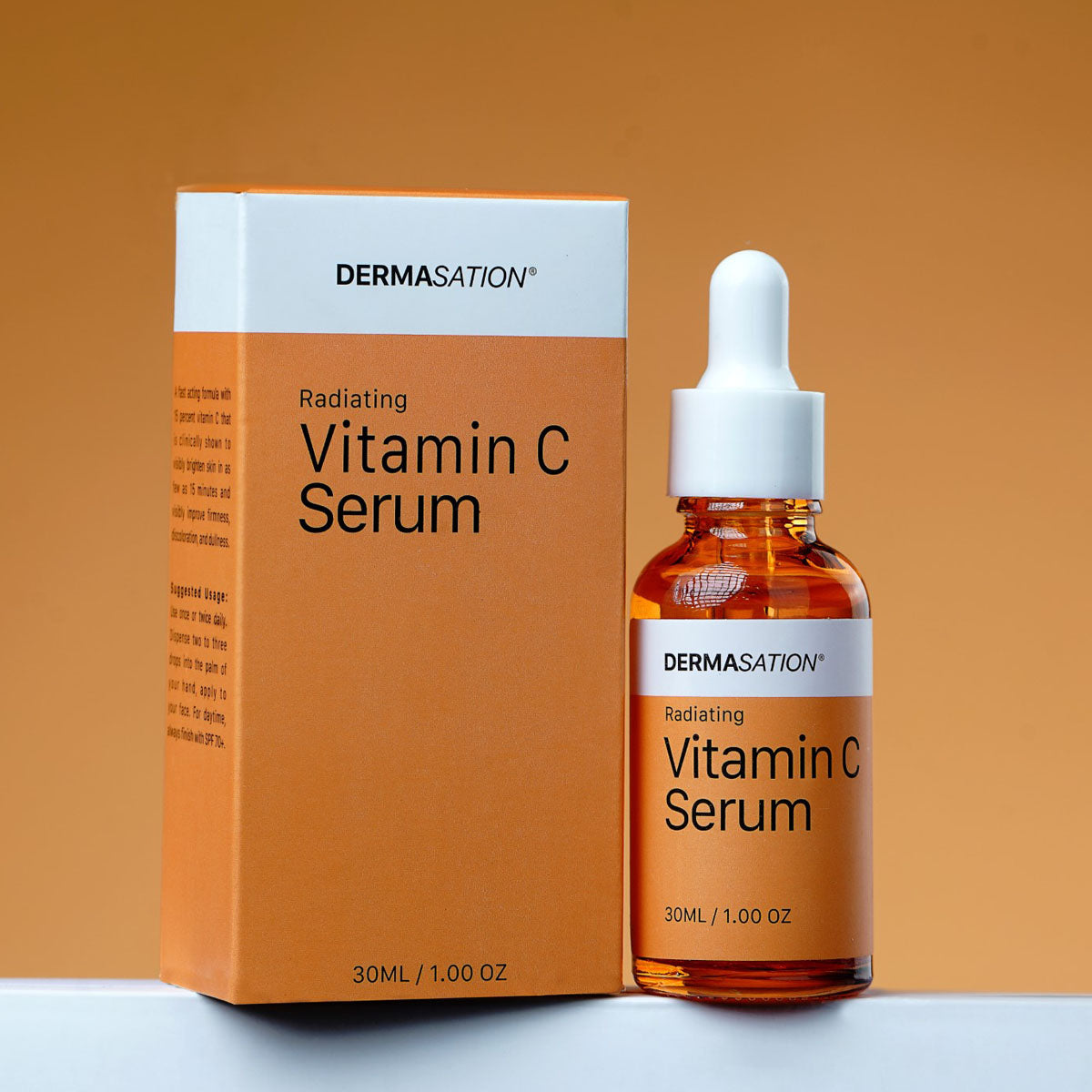
Radiating Vitamin C Serum — 5% · 30ml · Rs. 1,720
A gentle concentration for daily morning use, including on skin that finds stronger vitamin C irritating. Used once daily, a bottle lasts around two months.
Best for: dullness, dark spots, hyperpigmentation, sensitive skin, first-time vitamin C users
Vitamin E — which stabilises vitamin C and works alongside it — is also in the Skin Brightening Cleanser.
How to Apply Vitamin C Serum
Three to four drops on clean, dry skin in the morning. Dry matters — damp skin can increase stinging.
Press it in rather than rubbing. Let it absorb for a minute, then moisturizer, then SPF as the final step.
Storage: keep the bottle closed and out of direct sunlight. This matters more with vitamin C than with any other serum.
Timing: morning, not night. Its antioxidant protection is most useful during daylight hours when UV and pollution exposure happen.
What to Pair It With
| Pairing | Verdict |
|---|---|
| Vitamin C + SPF | Excellent — the intended combination |
| Vitamin C + hyaluronic acid | Good — layer freely |
| Vitamin C + niacinamide | Fine for most — separate if reactive |
| Vitamin C + retinol | Separate — C in the morning, retinol at night |
| Vitamin C + glycolic acid | Separate — C in the morning, acid at night |
Frequently Asked Questions
What is the vitamin C serum price in Pakistan?
Rs. 1,720 for 30ml at 5%. Used once daily in the morning, that's roughly two months of use.
What is the best vitamin C serum in Pakistan?
One you'll use every morning and that hasn't oxidised on the shelf. Packaging and turnover matter as much as concentration — a fresh serum at a moderate percentage beats an old premium one.
How do I apply vitamin C serum?
Three to four drops on clean, dry skin in the morning, before moisturizer. Press in, wait a minute, then moisturize and apply SPF.
Is vitamin C serum good for dark spots?
Yes — it slows melanin production, so spots fade and new ones form more slowly. It works better on preventing new pigment than clearing existing marks; pairing it with an exfoliating acid at night covers both.
Morning or night?
Morning. The antioxidant benefit is wasted overnight.
Does it replace sunscreen?
No, and this is a common misunderstanding. Vitamin C doesn't filter UV or raise your SPF. It handles the free radical damage sunscreen doesn't stop — the two do different jobs.
Is 5% enough?
For brightening and antioxidant protection, yes, particularly on sensitive skin. Higher concentrations act faster on stubborn pigmentation but sting more and are abandoned more often.
Why has my serum turned orange?
Oxidation. Vitamin C darkens as it degrades, and once deep orange or brown it's doing little. Keeping it closed and out of light slows this considerably.
Can I use it with niacinamide?
Yes for most people. The old advice that they cancel out has largely been set aside. Separate them morning and evening if your skin is reactive.