
Salicylic Acid (BHA)




Cash on deliveryPay when it arrives
Free shippingOn orders over Rs. 2,000
Fast delivery2–4 working days in major cities
14-day money-backIf it doesn't suit your skin
Buying guide
About Salicylic Acid (BHA)
Salicylic acid is the only common skincare acid that gets inside the pore. That single property is why it's the standard for blackheads and congestion — and why no amount of surface exfoliation replaces it.
What Salicylic Acid Is
Salicylic acid is a beta hydroxy acid (BHA), derived originally from willow bark. The property that matters is that it's oil-soluble.
Most exfoliating acids — glycolic, lactic, mandelic — are water-soluble. They work on the skin's surface, loosening dead cells so they shed. Useful, but they can't penetrate a pore blocked with sebum, because oil and water don't mix.
Salicylic acid dissolves into oil. It travels down into the pore, breaks up the mixture of sebum and dead skin sitting there, and clears it from the inside. That's the whole reason it exists in skincare.
Why 2% Is the Number
2% is the maximum concentration permitted in over-the-counter leave-on and rinse-off skincare in most markets, and it's the level most clinical work is based on.
Below 0.5%, the effect is marginal. Above 2%, irritation rises without proportionate benefit — and higher concentrations move into professional peel territory, which is clinic work rather than home use.
So when a product says "salicylic acid" without a number, it's worth asking. 0.5% and 2% are very different products.
What It's Good For
- Blackheads — the clearest use case. Blackheads are oxidised oil in the pore opening, and salicylic acid is the thing that reaches them.
- Closed comedones — the small bumps under the surface that aren't quite spots
- Oily, congested skin — keeps pores clear before congestion becomes a breakout
- Enlarged-looking pores — pores look wider when packed; clearing them makes them less visible
What it isn't for: dark spots, dullness or uneven tone. Those are surface-level pigment problems, and glycolic acid is the better tool.
Salicylic Acid vs Glycolic Acid
| Concern | Salicylic (BHA) | Glycolic (AHA) |
|---|---|---|
| Blackheads, congestion | Best choice | Surface only |
| Active breakouts | Best choice | Not first choice |
| Oil control | Best choice | Indirect |
| Dark spots, pigmentation | Indirect | Best choice |
| Dullness, rough texture | Partial | Best choice |
They aren't competing. Used together — a salicylic acid cleanser plus a glycolic acid toner — you cover inside the pore and the surface above it.
Products With Salicylic Acid
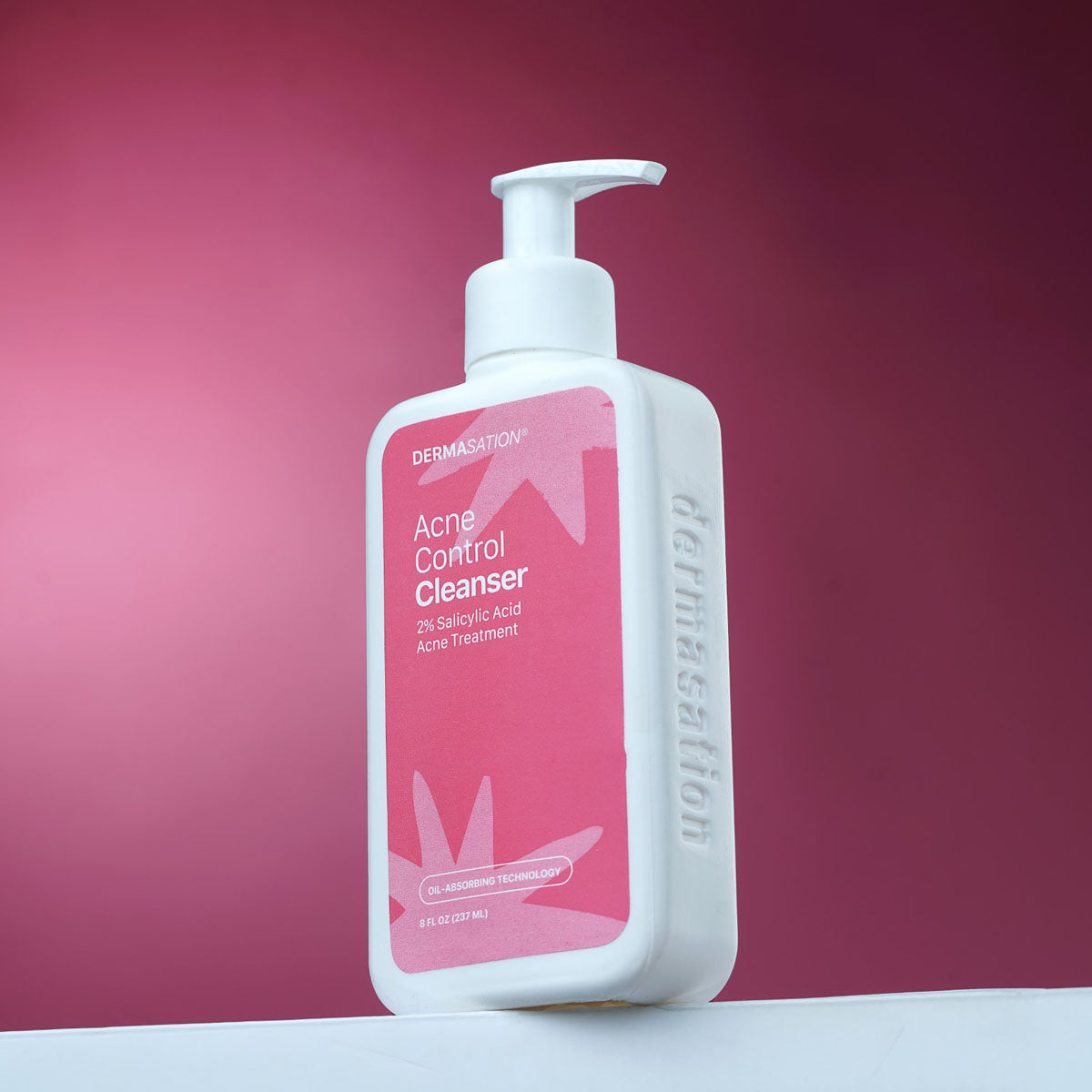
Acne Control Cleanser — 2% Salicylic Acid · 237ml · Rs. 2,000
A salicylic acid face wash at the full 2%, gentle enough for twice-daily use. Most acne cleansers strip the skin, which triggers more oil and makes things worse over a few weeks — this one delivers a real active without that.
Best for: blackheads, congestion, oily and acne-prone skin
Foaming Facial Cleanser · 237ml · Rs. 2,000
Ceramides, hyaluronic acid and niacinamide for daily cleansing on oily and combination skin, without the salicylic acid. The everyday option if your skin doesn't need an active in every wash.
How to Use It
In a cleanser: lather for 30–60 seconds so the acid has contact time before rinsing. Twice daily once your skin has adjusted — start once daily in the evening for the first week or two.
Alongside other actives: a rinse-off salicylic acid cleanser doesn't conflict with a leave-on glycolic acid toner afterwards. Cleanse, then apply the toner on the evenings you use it.
Sun protection: salicylic acid is less photosensitising than AHAs, but daily SPF still matters — particularly if you're treating post-acne marks, which darken with UV.
Frequently Asked Questions
Is there a salicylic acid face wash available in Pakistan?
Yes — the Acne Control Cleanser is formulated at 2%, the maximum over-the-counter concentration. Rs. 2,000 for 237ml, locally made rather than imported.
What is the salicylic acid price in Pakistan?
Locally made salicylic acid cleansers generally run Rs. 500–2,500. Imported options cost considerably more for the same active at the same concentration.
Is salicylic acid good for blackheads?
It's the single best over-the-counter option. Because it's oil-soluble it dissolves into the sebum blocking the pore rather than working on the surface above it. Expect visible change over two to four weeks.
Glycolic acid or salicylic acid — which do I need?
Blackheads, oiliness and breakouts → salicylic. Dark spots, dullness and rough texture → glycolic. Both, if you have both.
Can I use salicylic acid every day?
In a rinse-off cleanser, yes — twice daily once adjusted. Leave-on formulas need more caution.
Does it help with open pores?
Yes, indirectly. Pores can't shrink, but clearing what's packed inside makes them noticeably less visible.
Is it safe during pregnancy?
Topical salicylic acid at low concentrations is generally considered lower-risk than oral forms, but this is a question for your doctor.
Does it dry the skin out?
It can if overused. Follow with a non-comedogenic moisturizer — stripped skin produces more oil, which defeats the purpose.