Body Scrub in Pakistan: How and Where to Use One

In shortWhere a body scrub makes the biggest difference, how often to use one, what not to do, and the truth about dark elbows and knees.
Most people scrub their face carefully and ignore everything below the neck. Then wonder why their arms feel rough and their knees stay dark.
Body skin is thicker, sheds more slowly, and gets far less attention — which is exactly why exfoliation shows faster there than on your face.
What a Body Scrub Actually Does
It removes dead cells from the surface mechanically — the particles physically lift them away.
That matters more on the body than the face for a simple reason: body skin is thicker and turns over more slowly. Dead cells accumulate, which is what makes skin look ashy, feel rough, and stop absorbing moisturizer properly.
Clear that layer and two things happen immediately. Texture smooths, and whatever you apply afterwards actually reaches skin instead of sitting on a barrier of dead cells.
Where It Makes the Biggest Difference
Upper arms and thighs. If you have small rough bumps there — sometimes called chicken skin — regular exfoliation followed by moisturizer is the standard approach. It's extremely common and often mistaken for acne.
Elbows and knees. Thicker skin, constant friction, and usually the darkest areas on the body. They respond well but need consistency rather than force.
Legs. Particularly if you shave or wax — exfoliating a day or two before reduces ingrown hairs by clearing the dead skin that traps them.
Back and shoulders. Where body breakouts usually happen, and where nobody exfoliates because it's awkward to reach.
Feet and heels. The roughest skin on the body, and the area most responsive to regular attention.
How to Use One Properly
- Damp skin, in the shower. Let warm water soften the skin for a minute first.
- Work in small circles over rough areas. You can be firmer on the body than the face — but firm isn't the same as aggressive.
- Spend longer on elbows, knees and heels. Thirty seconds each rather than a quick pass.
- Rinse with lukewarm water. Hot water strips lipids and leaves skin tight.
- Moisturize while damp. This is the step that converts exfoliation into smooth skin. Skipping it wastes the scrub.
Once or twice a week is right for most people. More causes irritation, and irritated skin on the body looks the same as it does on the face — red, reactive, and worse than before.
What Not to Do
- Don't scrub sunburnt skin. Wait until it's fully healed.
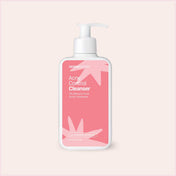
- Don't scrub over active breakouts on your back or chest. Physical exfoliation spreads bacteria and worsens inflammation — a salicylic acid cleanser is the better tool there.
- Don't scrub freshly shaved skin. Exfoliate a day before, not after.
- Don't use it daily. Over-exfoliation is the most common mistake, and it takes weeks to recover from.
- Don't press hard. The particles do the work. Pressure just causes micro-damage.
Face and Body — Do You Need Two Products?
Not necessarily, but the technique differs.
Facial skin is thinner and more reactive, so a scrub gentle enough for the face works everywhere. The reverse isn't true — a coarse body-only scrub on your face causes micro-tears.
So a scrub formulated as gentle enough for facial use is the versatile option: light pressure on the face, firmer on elbows and knees.
What About Dark Elbows and Knees?
Worth being realistic. Darkness there comes from a combination of thickened skin, friction, and pigmentation — and each responds differently.
Exfoliation helps with the thickened-skin part, and that alone produces visible improvement for most people.
The pigmentation part is slower. Friction from clothing, leaning on elbows and kneeling keeps triggering it, so it returns without ongoing attention. Consistent moisturising reduces friction damage more than most people expect.
Anything promising to remove dark knees in a week is describing surface exfoliation, not pigment change.
Scrub vs Chemical Exfoliation
| Scrub | Acid | |
|---|---|---|
| How it works | Buffs cells away | Dissolves the bonds holding them |
| Immediate smoothness | Yes, same day | Builds over weeks |
| Practical on the body | Yes | Awkward over large areas |
| Dark spots and tone | Limited | Better |
| Frequency | 1–2× a week | 3–4 evenings a week |
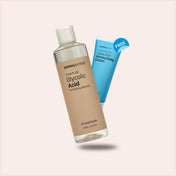
They're complementary, not competing — but never on the same day. For the face, the Glycolic Acid 7% Toner handles the chemical side. On the body, a scrub is simply more practical.
What We Make
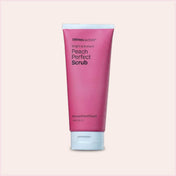
The Peach Perfect Scrub is formulated for face and body — gentle enough for facial skin, effective on elbows, knees and legs. Rs. 875, the most affordable product in the range.
Follow it with a ceramide moisturizer while skin is still damp. See the full scrub collection.
Frequently Asked Questions
What is the best body scrub in Pakistan?
One gentle enough that you'll use it consistently, at a price that makes weekly use sustainable. Harsh scrubs with sharp particles cause more damage than benefit. Ours is Rs. 875 and works on face and body.
What is the body scrub price in Pakistan?
Roughly Rs. 500–2,500 for a full size locally. A single product that works on both face and body is better value than buying two.
How often should I use a body scrub?
Once or twice a week. More causes irritation, which undoes the benefit.
How do I use a body scrub?
In the shower on damp skin, working in small circles over rough areas. Rinse with lukewarm water and moisturize while still damp.
Will it help with rough bumps on my arms?
Yes — that's one of the clearest use cases. Regular exfoliation followed by moisturizer is the standard approach, though it needs consistency rather than intensity.
Does a scrub help with dark elbows and knees?
Partly. It clears the thickened, dead skin that contributes to the darkness, which produces visible improvement. The pigmentation underneath is slower and returns without ongoing care.
Can I use a face scrub on my body?
Yes. A scrub gentle enough for facial skin works everywhere. The reverse isn't safe — coarse body scrubs damage facial skin.
Can I scrub before shaving?
Exfoliate a day before, not immediately before or after. It reduces ingrown hairs by clearing the dead skin that traps them.
Should I moisturize after scrubbing?
Always, while skin is still damp. This is the step that turns exfoliation into smooth skin rather than just clean skin.
General information, not medical advice.
Read more: shop the scrub · ceramide moisturizers · chemical exfoliation for the face