What Glycolic Acid Is and How It Works: Complete Guide
In shortThis guide answers all of that in plain language. You'll learn what glycolic acid is, how it works, what it can and can't do, and how to use it safely, so you can decide if it's right for your skin.
If your skin looks dull no matter what you do, feels rough to the touch, or holds on to dark marks for months, there's a good chance it simply needs better exfoliation. And when it comes to exfoliating ingredients, glycolic acid is one of the most trusted names in skin care.
But the word "acid" puts a lot of people off. Will it burn? Is it too strong? Can you use it every day?
This guide answers all of that in plain language. You'll learn what glycolic acid is, how it works, what it can and can't do, and how to use it safely, so you can decide if it's right for your skin.
What Is Glycolic Acid?
Glycolic acid is an AHA, short for alpha hydroxy acid. AHAs are a group of exfoliating acids that work on the surface of your skin.
It was first found in sugarcane, and today it's made in labs so it's pure and consistent. Of all the AHAs, glycolic acid has the smallest molecules. That's important: smaller molecules move into the top layer of skin more easily, which is why glycolic acid works faster and more visibly than other AHAs like lactic or mandelic acid.
In simple terms, glycolic acid is a gentle chemical exfoliant. Instead of scrubbing your skin, it loosens dead skin cells so they can fall away on their own.
How Does Glycolic Acid Work?
Your skin is always renewing itself. New cells form deep down and slowly move up to the surface, while old cells on top are meant to shed away.
The problem is that this process slows down. Age, sun damage, dehydration and pollution all make old cells stick around longer. When they build up, your skin can look:
-
Dull and flat, because dead cells don't reflect light well
-
Rough or bumpy, especially on the cheeks and forehead
-
Uneven, with dark spots and marks that take ages to fade
-
Congested, with clogged pores and blackheads
Glycolic acid helps by breaking the "glue" that holds those dead cells together. Once that bond is loosened, the cells shed more easily, revealing the fresher, smoother skin underneath.
Over time, regular use also helps your skin renew itself at a healthier pace. That's why results build week by week instead of disappearing after one use.
What Are the Benefits of Glycolic Acid?
1. Brighter, glowing skin
Clearing away the dull top layer is the fastest way to bring back your skin's natural glow. Most people notice brighter skin within the first two weeks.
2. Smoother texture
Rough patches and small bumps soften as dead skin buildup clears. Skin feels noticeably softer to the touch.
3. Fading dark spots and acne marks
Dark spots sit in the upper layers of skin. As glycolic acid speeds up how quickly those pigmented cells shed, marks gradually lighten. You can read more in our guide to glycolic acid for dark spots and acne marks.
4. Clearer-looking pores
When dead cells mix with oil, they clog pores and make them look bigger. Regular exfoliation keeps pores clearer, so they look smaller and more refined.
5. Softer-looking fine lines
By supporting healthy skin renewal, glycolic acid can soften the look of fine lines over time, especially when paired with daily sunscreen.
6. Better results from your other products
With the dead layer out of the way, the serums and moisturizers you apply next can absorb better and work more effectively.
What Glycolic Acid Can't Do
Honest expectations matter. Glycolic acid is excellent, but it isn't magic.
-
It won't change your natural skin color. It brightens and evens out tone, but it doesn't "whiten" skin.
-
It won't remove deep or pitted acne scars. Those change the skin's structure and need treatment from a dermatologist.
-
It won't clear active, painful cystic acne on its own.
-
It won't work overnight. Real change takes weeks of steady use.
What Percentage of Glycolic Acid Should You Use?
Strength matters. More isn't always better.
|
Strength |
What it does |
Best for |
|
Below 5% |
Very mild; limited visible results |
Very sensitive skin, first-time users |
|
7% |
Visible results without harsh irritation |
Regular use at home |
|
10–15% |
Strong exfoliation, higher risk of irritation |
Experienced users, not every week |
|
20% and above |
Professional peel strength |
In-clinic use only |
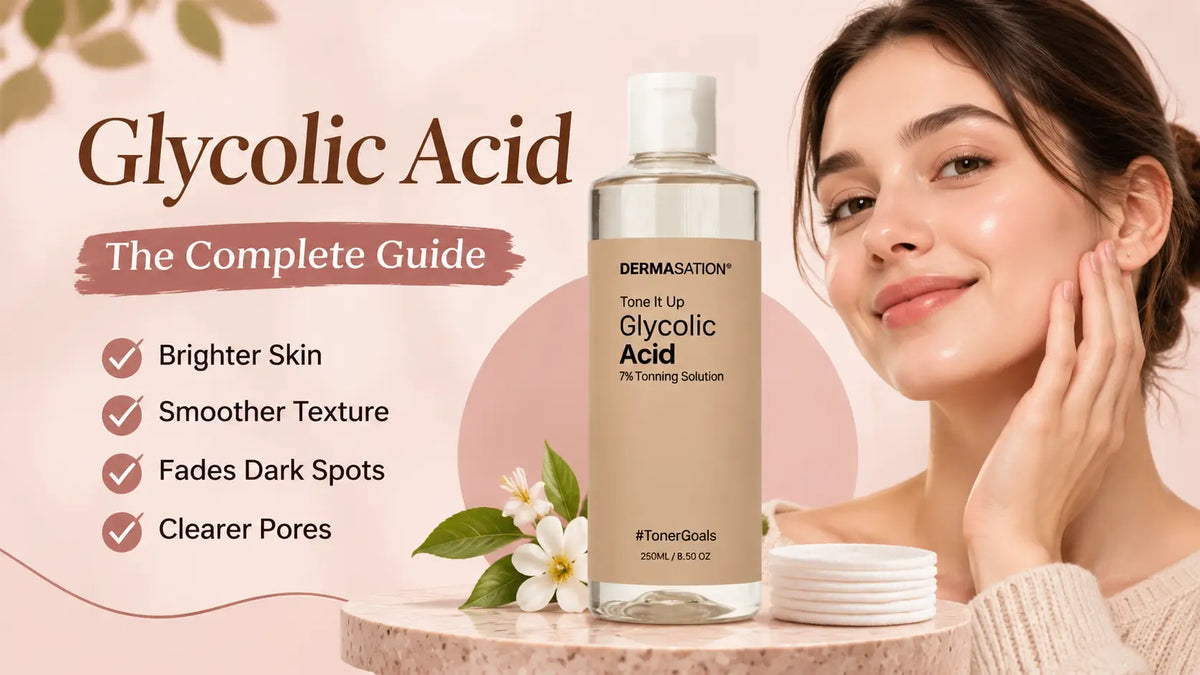
For most people, around 7% is the sweet spot. It's strong enough to make a visible difference and gentle enough for a regular home routine. That's why the Dermasation Glycolic Acid Toner is formulated at 7%.
How to Use Glycolic Acid Safely
Glycolic acid works best in a leave-on toner used in the evening. Here's how:
1. Wash your face with a gentle cleanser and pat it completely dry.
2. Put a few drops of toner on a cotton pad.
3. Sweep it over your face and neck, avoiding your eyes and lips.
4. Leave it on. Don't rinse.
5. Wait 3–5 minutes, then apply moisturizer.
6. The next morning, wear sunscreen.
For a full walkthrough, read our step-by-step guide on how to use glycolic acid toner.
How often should you use it?
Start slowly and let your skin adjust:
|
Time |
How often |
|
Weeks 1–2 |
2 evenings a week |
|
Weeks 3–4 |
3 evenings a week, if there's no irritation |
|
After that |
Up to 3–4 evenings a week |
Glycolic acid isn't a nightly product. Rest nights give your skin time to recover, and that's what keeps results coming without irritation.
Why Sunscreen Is Non-Negotiable
Glycolic acid reveals fresh new skin, and fresh skin is more sensitive to the sun. Without sunscreen, two things happen: your skin burns more easily, and dark spots can get darker instead of lighter.
This matters even more in places with strong sun, like Pakistan, where the UV Index often reaches extreme levels in summer. Wear a broad-spectrum SPF 50 every morning, and reapply if you're outdoors for long.
What Can You Use With Glycolic Acid?
Glycolic acid pairs well with many ingredients, as long as you time them right.
|
Ingredient |
Can you use it with glycolic acid? |
How |
|
Niacinamide |
Yes |
In the morning, or after the toner on the same night |
|
Hyaluronic acid |
Yes |
After the toner, for extra hydration |
|
Vitamin C |
Yes, at different times |
Vitamin C in the morning, glycolic acid at night |
|
Retinol |
Yes, on different nights |
Never on the same night |
|
Salicylic acid face wash |
Yes |
It rinses off, so it won't clash with the toner |
|
Face scrubs |
Yes, on different days |
Never on the same day |
|
Sunscreen |
Always |
Every morning |
Want the full details? See our guide to using glycolic acid with niacinamide, vitamin C and retinol.
Glycolic Acid vs Salicylic Acid
These two are often confused, but they do different jobs.
|
Glycolic acid (AHA) |
Salicylic acid (BHA) |
|
|
Works on |
The skin's surface |
Inside the pores |
|
Best for |
Dullness, texture, dark spots |
Blackheads, clogged pores, oily skin |
|
Dissolves in |
Water |
Oil |
They actually work well together. Read more in AHA vs BHA: glycolic acid or salicylic acid?
Is Glycolic Acid Right for Your Skin Type?
|
Skin type |
Good match? |
Tip |
|
Oily |
Yes, excellent |
2–4 evenings a week |
|
Combination |
Yes |
Focus on the T-zone |
|
Normal |
Yes |
2–3 evenings a week |
|
Dry |
Yes, with care |
Start once a week, follow with a rich moisturizer |
|
Sensitive |
Patch test first |
Start once a week |
Find specific advice in our guide to glycolic acid for oily, dry and sensitive skin.
Who should be careful?
Skip glycolic acid, or check with a doctor first, if:
-
Your skin is broken, sunburnt, peeling or already irritated
-
You've had waxing, laser or a chemical peel in the last few days
-
You're pregnant or breastfeeding
-
You have a skin condition like eczema or rosacea
Is Tingling Normal?
A light tingle for a few seconds after applying is normal, especially in the first few uses. Burning, stinging that lasts, or redness that doesn't settle is not. If that happens, rinse your face, skip a few nights and come back at a lower frequency.
Some people also see a few extra breakouts in the first weeks. This is often purging, when clogs that were already forming come to the surface faster. It usually settles within 4–6 weeks. Learn how to tell the difference in our guide to glycolic acid side effects and purging.
What Results Can You Expect?
|
Time |
What you'll notice |
|
Week 1 |
Softer, smoother skin |
|
Week 2 |
A visible glow |
|
Weeks 3–4 |
Texture refines and dark spots start to lighten |
|
Weeks 6–12 |
Clearer, more even-toned skin |
Results depend on steady use and daily sunscreen. Skipping either one slows everything down.
How to Choose a Good Glycolic Acid Product
Look for:
-
A clear percentage on the label, ideally around 7% for home use
-
A leave-on toner rather than a wash-off product, so it has time to work
-
Fragrance-free, especially if your skin is sensitive
-
Soothing extras like aloe or rose water to keep skin comfortable
-
A generous size, since you'll be using it for months
Our Glycolic Acid Toner 7% ticks all of these: a fragrance-free, leave-on formula in a 250ml bottle that lasts around three months. You can also explore our glycolic acid products, including bundles with sunscreen and moisturizer.
Conclusion
Glycolic acid is one of the simplest ways to get smoother, brighter, more even skin. It works by clearing away the dull, dead layer your skin struggles to shed on its own.
The secret isn't using more or stronger acid. It's using the right strength, starting slowly, giving your skin rest nights and wearing sunscreen every morning. Do that, and your skin will thank you within a few weeks.
Frequently Asked Questions
What does glycolic acid do to your face?
It loosens and removes dead skin cells, which brightens dull skin, smooths texture, helps fade dark spots and keeps pores clearer.
Is glycolic acid safe for daily use?
Not for most people. Use it 2–4 evenings a week, with rest nights in between.
Can beginners use glycolic acid?
Yes. Start with a 7% toner twice a week and build up slowly.
Should I use glycolic acid in the morning or at night?
At night. It makes skin more sensitive to the sun, so evening use plus morning sunscreen works best.
How long does glycolic acid take to work?
Most people see a glow within 2 weeks and fading of dark spots from around week 3–4.
Does glycolic acid lighten skin?
It brightens skin and fades dark spots, but it doesn't change your natural skin color.
Can I use glycolic acid with vitamin C?
Yes, at different times of day. Use vitamin C in the morning and glycolic acid at night.