Glycolic Acid for Pigmentation and Dark Spots: What Actually Works
In shortWhy brightening serums alone stall on dark spots, how glycolic acid clears surface pigment, and the realistic timeline for fading pigmentation.
Most people treating pigmentation are only doing half the job — and that's why progress stalls around week four.
Understanding why requires knowing how a dark spot actually forms.
How Pigmentation Forms
Pigmentation happens in two stages.
Stage one: melanocytes in the deeper layers of your skin produce melanin. This is triggered by UV exposure, inflammation from a breakout, hormones, or heat.
Stage two: that melanin is transferred upward into surface skin cells, where it sits and becomes visible as a dark spot or patch.
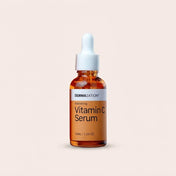
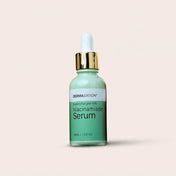
Nearly every brightening product works on stage one. Kojic acid, alpha arbutin, vitamin C and niacinamide all slow production or transfer. They're genuinely effective — but they do nothing about the pigmented cells already sitting on your face.
Those cells shed on their own eventually. Slowly. Which is why a spot can look unchanged for months while you're diligently applying a brightening serum.
Where Glycolic Acid Comes In
Glycolic acid works on stage two.
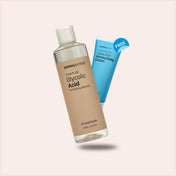
It's an alpha hydroxy acid — water-soluble, working on the skin's surface. It dissolves the bonds holding dead skin cells in place, including the pigmented ones, so they shed faster than they would naturally.
Remove that top layer and dark spots look visibly lighter, often before the underlying pigment has changed at all. You're not bleaching anything; you're clearing away cells that were already on their way out.
It's also the smallest AHA molecule used in skincare, which is why it penetrates faster and works more visibly than lactic or mandelic acid.
Why the combination matters
Slow production and clear what's there, and the two compound. Do only one and you either fade slowly or stall once the surface layer clears and new pigment keeps arriving.
That's the logic behind pairing an exfoliating acid at night with a brightening active in the morning.
What Glycolic Acid Works On
| Type | Response |
|---|---|
| Post-acne marks — flat brown or red marks after a spot heals | Good, and relatively fast |
| Sun spots — scattered brown patches from UV exposure | Good, over 8–12 weeks |
| General uneven tone | Good — often the first thing to improve |
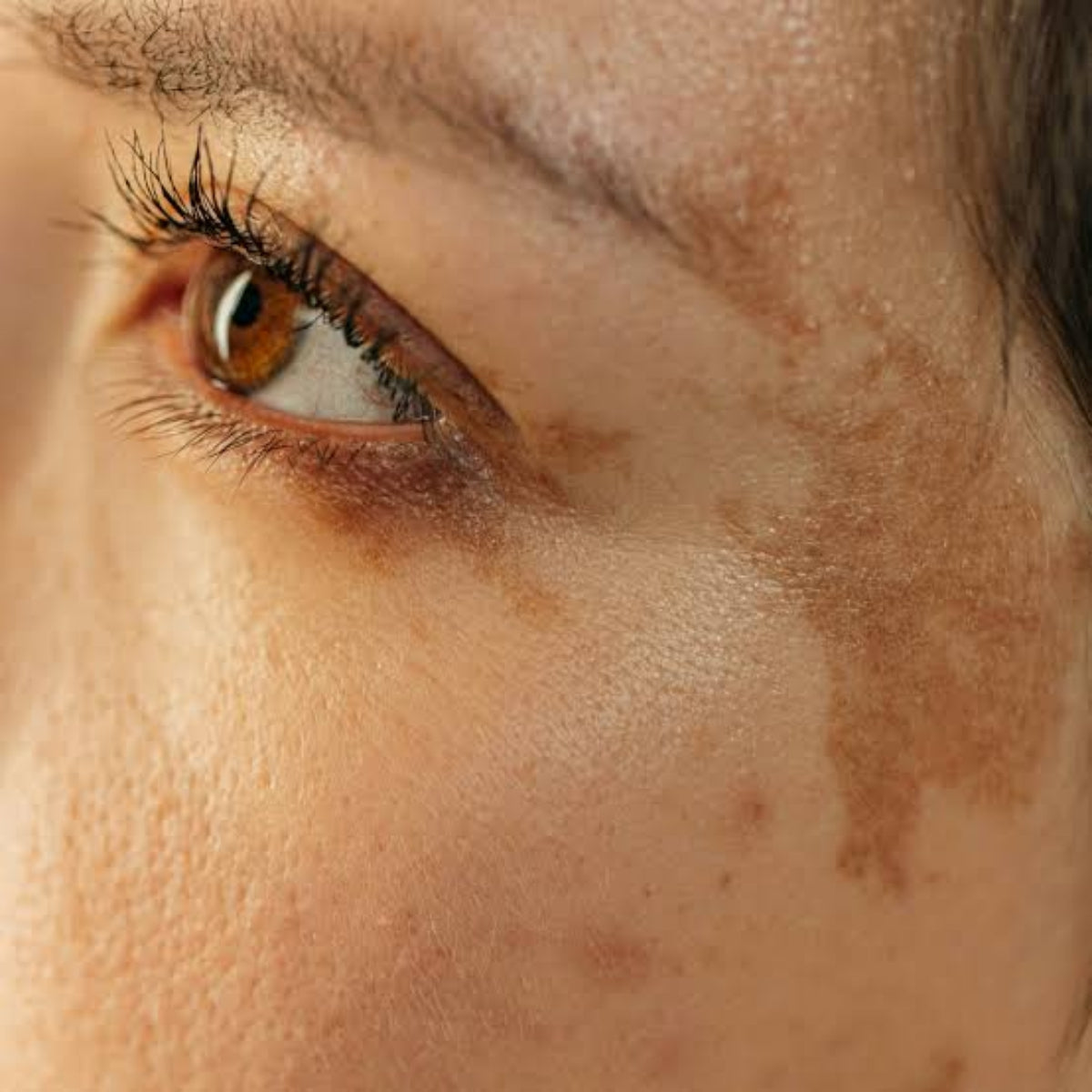
| Melasma — larger symmetrical patches, often hormonal | Partial. More stubborn, needs strict sun protection |
| Raised or indented scars | No effect — textural, not pigmentary |
That last row matters. If you can feel the mark with your fingertip, it's a texture problem, and no acid or serum resolves it — that's clinical treatment.
Can Pigmentation Be Removed Permanently?
Honestly — no, and it's worth being clear about that.
You can fade existing pigmentation substantially. What you can't do is stop your skin producing melanin permanently, because that's a normal protective response to UV.
So the realistic framing isn't "remove permanently." It's fade what's there, then prevent new pigment forming. The second half is daily sunscreen, indefinitely. Stop wearing it and spots return within months, whatever you used to fade them.
Anything promising permanent removal is either describing a clinical procedure or overselling.
A Routine That Works on Both Stages
Morning: cleanse → vitamin C or niacinamide → moisturizer → sunscreen
Two to four evenings a week: cleanse → glycolic acid toner → wait 3–5 minutes → moisturizer
Other evenings: cleanse → moisturizer
Three points that decide whether this works:
- Start at two evenings a week. Irritated skin produces more pigment, not less — inflammation is itself a trigger. Over-exfoliating is genuinely counterproductive here, more so than for any other concern.
- Moisturize after every use. A damaged barrier means more inflammation, which means more pigment.
- Sunscreen every morning, without exception. Glycolic acid raises UV sensitivity for several days, and UV is what caused the pigmentation to begin with.
Why Sunscreen Is the Real Treatment
If you take one thing from this: on a pigmentation routine, sunscreen isn't the supporting step. It's the main one.
UV deepens existing spots faster than any active can fade them. Without daily protection you're clearing pigment at night and generating more of it by day — running to stand still, while paying for products that can't win.
Pakistan's UV Index reaches 10–12 through summer. UVA — the wavelength that drives pigmentation most — passes through cloud and window glass year-round.
Anyone who has treated pigmentation successfully will tell you the same thing: the sunscreen did more than the serum.
What About Home Remedies?
Lemon juice, baking soda, turmeric and apple cider vinegar come up constantly for pigmentation. Worth being straight about them.
Lemon juice is highly acidic and photosensitising. Applied to skin and exposed to sun, it can cause phytophotodermatitis — a genuine chemical burn that leaves darker pigmentation than you started with. This is the one to avoid outright.
Baking soda is strongly alkaline and disrupts the skin barrier, which triggers inflammation, which triggers pigment.
Turmeric has some anti-inflammatory evidence behind it, but at unpredictable doses and with a tendency to stain.
The problem isn't that home remedies are unsophisticated — it's that pigmentation responds badly to irritation, and most kitchen ingredients are irritating at uncontrolled concentrations.
How Long It Takes
| Timeline | What to expect |
|---|---|
| Weeks 1–2 | Smoother texture, brighter overall tone. Spots unchanged. |
| Weeks 4–6 | Recent marks starting to lighten |
| Weeks 8–12 | Visible fading of post-acne marks and sun spots |
| Month 4+ | Deeper pigmentation and melasma — the slowest |
Recent marks fade faster than old ones. Anything more than a few months old takes longer, and consistent sunscreen roughly halves the time.
Frequently Asked Questions
Does glycolic acid help with hyperpigmentation?
Yes — it's one of the most effective options without a prescription. It clears pigmented cells from the skin's surface, which is the half of the problem brightening serums don't address.
How do I remove dark spots on my face?
Three things together: exfoliate the pigmented surface cells, slow new pigment forming with a brightening active, and wear sunscreen daily. Missing any one is why most attempts stall.
How long until dark spots fade?
Recent marks from around week four to six. Older or deeper pigmentation takes two to three months or more.
Can pigmentation be removed permanently?
It can be faded substantially, but not prevented from ever returning. Melanin production is a normal UV response — keeping skin clear is a matter of ongoing sun protection.
Glycolic acid or vitamin C for dark spots?
They do different jobs and work best together. Glycolic acid clears existing pigmented cells; vitamin C slows new pigment forming. Vitamin C in the morning, glycolic acid at night.
Will it work on melasma?
Partially. Melasma is hormonally driven and heat-sensitive as well as UV-driven, making it more stubborn than sun spots. Persistent cases are worth discussing with a dermatologist.
Can I use glycolic acid every night for faster results?
No — and it backfires specifically here. Irritation triggers inflammation, and inflammation triggers pigment production. Maximum three to four evenings a week.
General information, not medical advice. For persistent melasma or pigmentation that changes in appearance, see a dermatologist.
Read more: shop pigmentation products · glycolic acid side effects · sunscreen