Best Niacinamide Serum in Pakistan: How to Choose and Use It
In shortHow to choose a niacinamide serum in Pakistan, why 10% is the right concentration, how to use it, and whether it conflicts with vitamin C.
If you're going to add one serum to your routine, this is usually the one. Not because it's dramatic — it isn't — but because it does several useful things at once and almost nobody's skin objects to it.
What Niacinamide Is
Niacinamide is a form of vitamin B3.
Unlike acids or retinol, it doesn't exfoliate or remove anything. It works by signalling — changing how skin cells behave rather than stripping layers away.
That's why there's no adjustment period, no purging, no sun sensitivity, and no rest days. You can use it every day from the first day, alongside almost anything else.
What It Actually Does
Regulates oil production
It reduces how much sebum your skin makes, rather than removing oil that's already there. That's an important distinction: mattifying products give you a few hours; niacinamide changes the baseline over a few weeks.
Makes pores look smaller
Pores can't shrink — they have no muscle, and their size is largely genetic. But they look wider when stretched by trapped oil. Reduce the oil and the same pore becomes noticeably less visible.
Fades dark spots
It interrupts the transfer of melanin from where it's produced to the surface cells where it becomes visible. Different mechanism from vitamin C or kojic acid, which slow production itself — which is why they combine well.
Calms redness
Useful for the inflammation around active breakouts, and one of the faster effects to notice.
Strengthens the barrier
It supports ceramide production, which is why it pairs so well with retinol and acids — it offsets some of the irritation they cause.
How to Choose a Niacinamide Serum in Pakistan
Most niacinamide serums contain the same active. What separates a good one from a poor one comes down to four things.
1. A stated concentration — ideally 10%
If the label doesn't give a percentage, there's usually a reason. Most clinical work sits between 2% and 5% for redness and barrier effects, with 10% used for sebum regulation and pigmentation.
Above 10%, evidence for extra benefit thins while irritation reports increase. Serums marketed at 15% or 20% are competing on the number rather than results — past a point the pathway saturates and more just means more irritation.
So 10% is the useful ceiling, not a compromise.
2. A base formula that suits your skin
Since the active is the same everywhere, the base is what differs. If a niacinamide serum has irritated you before, the base was the likely culprit rather than the niacinamide.
3. Price per ml, not price
Standard size is 30ml. Locally made 10% serums run roughly Rs. 1,500–2,500 for that. Imported equivalents typically cost two to three times more — shipping, duties and distributor margin, not better niacinamide.
The molecule is identical regardless of where it was blended.
4. Opaque, sealed packaging
Niacinamide is more stable than vitamin C, but light and air still degrade formulas over time. A dropper bottle in opaque glass beats a clear one.
What doesn't matter much
Added zinc, marketed heavily by some brands, has limited evidence for oil control at the concentrations used. Long ingredient lists of secondary actives generally add cost rather than results. And any claim of dramatic change in a week is describing hydration, not sebum regulation.
How to Use Niacinamide Serum
Three to four drops on clean skin, morning, before moisturizer and sunscreen.
It can be used morning and evening if you like. No rest days needed, no building up slowly, and it doesn't increase sun sensitivity — though you should still be wearing SPF regardless.
If you're layering, thinnest to thickest: serum, then moisturizer, then sunscreen last.
What to Pair It With
| Pairing | Verdict |
|---|---|
| Hyaluronic acid | Excellent — layer freely |
| Retinol | Excellent — niacinamide buffers retinol irritation |
| Glycolic acid | Good — acid at night, niacinamide in the morning |
| Salicylic acid | Good — one clears pores, the other reduces the oil refilling them |
| Vitamin C | Fine for most — separate morning and evening if reactive |
The vitamin C question
You'll still see advice that niacinamide and vitamin C cancel each other out. That claim comes from decades-old research using unstable raw ingredients at high heat — conditions that don't reflect modern formulations.
Most people can use both without issue. If your skin is particularly reactive, use vitamin C in the morning and niacinamide at night — not because they conflict chemically, but because fewer actives at once is generally easier on reactive skin.
Does It Cause Purging or Breakouts?
No. Purging happens when something accelerates cell turnover — acids and retinoids do this, niacinamide doesn't.
If you started niacinamide and began breaking out, the cause is more likely something else in the routine, a change in the rest of your skincare, or coincidence. Worth checking the full ingredient list of the specific product too — the base formula can be the issue rather than the active.
Who Should Use It
- Oily and combination skin — the most direct use case
- Acne-prone skin — for oil regulation and calming, alongside a salicylic acid cleanser rather than instead of one
- Visible pores — the most reliable over-the-counter option
- Post-acne marks — works on the pigment transfer stage
- Anyone starting with actives — the lowest-risk first step
- Anyone using retinol or acids — it makes them more tolerable
It's less essential if your main concerns are dryness or fine lines — hyaluronic acid and retinol are more direct for those.
How Long Until It Works
| Timeline | What you'll notice |
|---|---|
| Weeks 2–3 | Less oil through the day, calmer redness |
| Weeks 6–8 | Pores visibly less prominent |
| Weeks 8–12 | Dark spots and post-acne marks fading |
Nothing dramatic in week one. That's normal — niacinamide works by changing baseline behaviour, which takes a few cycles of skin turnover to show.
Frequently Asked Questions
What is the best niacinamide serum in Pakistan?
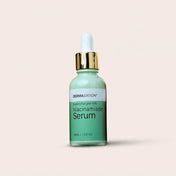
One at a stated 10% concentration, in a base that suits your skin, at a sensible price per ml. Since the active is identical across brands, paying two to three times more for an imported bottle buys import costs rather than better results. Ours is Rs. 1,720 for 30ml at 10%.
What is the niacinamide serum price in Pakistan?
Locally made 10% serums run roughly Rs. 1,500–2,500 for 30ml. Imported equivalents typically cost two to three times that for the same concentration.
What are the uses of niacinamide serum?
Oil regulation, reducing the appearance of pores, fading dark spots and post-acne marks, calming redness, and strengthening the skin barrier.
How do I use niacinamide serum?
Three to four drops on clean skin in the morning, before moisturizer and sunscreen. Daily use is fine — no rest days, no building up.
Is 10% niacinamide better than 5%?
For oil control and pigmentation, yes. For redness and barrier support, 5% is sufficient. Above 10% you're increasing irritation risk without matching benefit.
Is niacinamide good for oily skin?
It's the most useful single product for it. It reduces sebum production rather than stripping oil, so shine improves over weeks instead of rebounding.
Can I use niacinamide with vitamin C?
Yes, for most people. The old advice against it comes from research conditions that don't apply to modern formulas.
Does niacinamide cause purging?
No — it doesn't accelerate cell turnover, so there's no purging phase.
Can I use it every day?
Yes, morning and evening if you want. It's one of the few actives with no frequency limit.
Niacinamide or retinol?
Different jobs. Niacinamide for oil, pores and marks; retinol for fine lines and texture. They work well together — niacinamide in the morning, retinol at night.
General information, not medical advice.
Read more: how niacinamide works · shop serums · products for open pores