Salicylic Acid Face Wash: How to Choose and Use One

In shortHow salicylic acid clears blackheads, why 2% is the standard, how to choose a face wash, and how to use it without stripping your skin.
Salicylic acid is the only common skincare acid that gets inside the pore. If blackheads are your problem, nothing else on the shelf does the same job.
Here's how to pick one and use it without wrecking your skin.
Why It Works Where Other Acids Don't
Salicylic acid is a beta hydroxy acid (BHA), and the property that matters is that it's oil-soluble.
Most exfoliating acids — glycolic, lactic, mandelic — are water-soluble. They loosen dead cells on the skin's surface, which is genuinely useful, but they can't get into a pore that's blocked with sebum. Oil and water don't mix.
Salicylic acid dissolves into oil. It travels down into the pore, breaks up the plug of sebum and dead skin sitting there, and clears it from the inside.
That single property is the whole reason it exists in skincare, and why no amount of surface exfoliation replaces it.
What It's Good For — and What It Isn't
| Concern | Salicylic acid |
|---|---|
| Blackheads | Best option available over the counter |
| Closed comedones — small bumps under the surface | Very effective |
| Oily, congested skin | Effective — keeps pores clear before congestion becomes a spot |
| Enlarged-looking pores | Indirect — clearing what's packed inside makes them less visible |
| Dark spots and pigmentation | Not the right tool — use glycolic acid |
| Dullness, rough texture | Partial — glycolic acid is better |
| Cystic acne | Limited — usually needs prescription treatment |
How to Choose a Salicylic Acid Face Wash
1. Look for 2%
2% is the maximum permitted in over-the-counter skincare in most markets, and the level most clinical work is based on.
Below 0.5% the effect is marginal. Plenty of products say "contains salicylic acid" without a number, and an unstated percentage is usually low enough not to matter.
Above 2% moves into professional peel territory — clinic work, not home use.
2. Gentle matters more than strong
This is where most acne cleansers get it wrong. Harsh surfactants strip every trace of oil and call it clean — but stripped skin isn't clear skin. It's dehydrated skin that overproduces sebum to compensate, which is the cycle that makes acne worse over months of trying harder.
You want a real active at a real concentration in a base that doesn't strip. Those aren't contradictory.
3. Cleanser or leave-on?
A cleanser rinses off, so contact time is short — but it's applied twice daily to the whole face, which adds up, and it's far more forgiving for beginners.
Leave-on formulas work harder but need more caution. For most people with blackheads and general congestion, a well-formulated 2% cleanser used consistently does the job.
4. Price
Locally made salicylic acid cleansers run roughly Rs. 500–2,500 for a full size. Imported options cost considerably more for the same active at the same concentration — salicylic acid is inexpensive, and most of the price gap is import cost.
How to Use Salicylic Acid on Your Face
- Lather for 30–60 seconds. This matters more than people realise — a rinse-off product needs contact time to work. Rushing it wastes the active.
- Lukewarm water only. Hot water strips lipids and undoes the point of a gentle formula.
- Start once daily, in the evening. Build to twice daily after a week or two if your skin stays comfortable.
- Follow with moisturizer. Every time. Stripped skin produces more oil, which is the opposite of what you're after.
- Don't scrub. Fingertips, no brushes, no physical exfoliant on the same day.
Can You Use It With Other Acids?
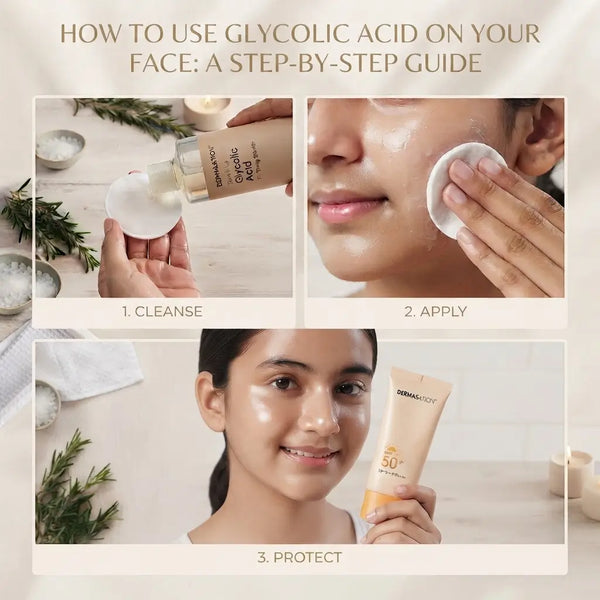
With glycolic acid: yes, and they complement each other well. Salicylic works inside the pore, glycolic on the surface. Because a cleanser rinses off, it doesn't conflict with a leave-on glycolic toner applied afterwards.
With niacinamide: an effective pairing. Salicylic acid clears the pores; niacinamide reduces the oil that refills them.
With retinol: fine, but don't layer a leave-on salicylic product with retinol on the same night. A rinse-off cleanser is not a problem.
Side Effects and Who Should Be Careful
Salicylic acid is generally well tolerated at 2%, but overuse causes the same problems as any acid:
- Dryness and tightness — usually from washing too often or too hot
- Flaking — reduce to once daily
- Persistent stinging or redness — stop for a few days and restart less frequently
It's also less photosensitising than AHAs, but daily sunscreen still matters — especially if you're treating post-acne marks, which darken with UV exposure.
Pregnancy: topical salicylic acid at low concentrations is generally considered lower-risk than oral forms, but this is a question for your doctor rather than an article.
Aspirin allergy: salicylic acid is chemically related to aspirin. If you're allergic, speak to a doctor first.
What to Expect
| Timeline | What happens |
|---|---|
| Weeks 1–2 | Skin feels cleaner, less oily by evening |
| Weeks 2–4 | Blackheads visibly reducing, especially nose and chin |
| Weeks 4–8 | Fewer new breakouts forming |
Note that a rinse-off product works gradually. If nothing has changed by week six, the concentration may be too low — check whether the label states one.
What We Make
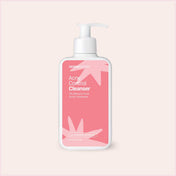
The Acne Control Cleanser is formulated at 2% salicylic acid — the full over-the-counter concentration — in a base gentle enough for twice-daily use. Rs. 2,000 for 237ml, which lasts around three months.
It's also in the Acne Treatment Bundle with the glycolic acid toner and 10% niacinamide serum — pore, surface and oil production covered together.
Frequently Asked Questions
What is the best salicylic acid face wash?
One at a stated 2% in a base that doesn't strip. Concentration and gentleness both matter — a harsh 2% cleanser triggers more oil production and makes things worse over a few weeks.
Is there a salicylic acid face wash available in Pakistan?
Yes. Ours is 2%, Rs. 2,000 for 237ml, locally made rather than imported.
What is the salicylic acid price in Pakistan?
Locally made cleansers run roughly Rs. 500–2,500 for a full size. Imported ones cost considerably more for the same active.
What are the benefits of salicylic acid?
Clearing blackheads and closed comedones, reducing congestion, controlling oil, and preventing breakouts forming. It works inside the pore, which surface exfoliants can't do.
How do I use salicylic acid on my face?
In a cleanser, lather for 30–60 seconds with lukewarm water, then rinse and moisturize. Start once daily in the evening and build to twice.
Is 2% salicylic acid strong?
It's the maximum available over the counter, but well tolerated by most people in a rinse-off format. Products below 0.5% do very little.
Salicylic acid or glycolic acid?
Blackheads, oiliness, breakouts → salicylic. Dark spots, dullness, rough texture → glycolic. Both, if you have both — they're complementary rather than competing.
Does it help with open pores?
Indirectly. Pores can't shrink, but clearing what's packed inside makes them significantly less visible.
Can I use it every day?
In a rinse-off cleanser, yes — twice daily once your skin has adjusted. Start slower.
General information, not medical advice. Persistent or cystic acne is worth discussing with a dermatologist.
Read more: how salicylic acid works · acne products · shop face wash