Sunblock vs Sunscreen — What's the Difference, and Which One Do You Actually Need
In shortSunblock and sunscreen get used interchangeably so often in Pakistan that most people assume they're just two names for the same thing.
"Sunblock" and "sunscreen" get used interchangeably so often in Pakistan that most people assume they're just two names for the same thing. There's actually a real difference worth understanding — and it affects which one you should be reaching for every morning. Here's the honest breakdown, along with what to actually look for when you're shopping.
Sunblock vs Sunscreen — What's Actually Different
The terms get used loosely, but technically:
- Sunblock traditionally refers to a physical or mineral formula — it sits on top of your skin and reflects UV rays away, like a physical shield. Zinc oxide and titanium dioxide are the classic sunblock ingredients.
- Sunscreen is the broader term, covering both mineral (physical) and chemical formulas — chemical sunscreens absorb into the skin and convert UV rays into heat, which is then released.
In everyday conversation in Pakistan, people say "sunblock" to mean almost any sun protection product, mineral or chemical. But if you're comparing formulas, this distinction genuinely matters — mineral (true sunblock) formulas tend to be gentler, work immediately, and are the safer choice alongside actives like Glycolic Acid or Retinol.
Why We Formulate as Mineral Sunblock, Not Chemical Sunscreen
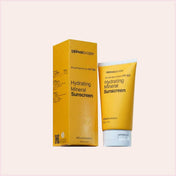
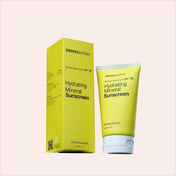
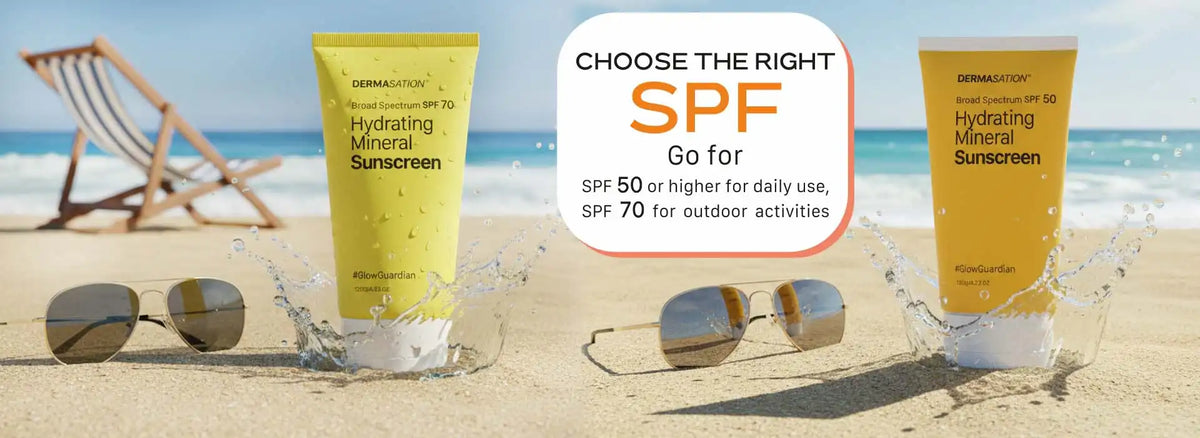
Our Hydrating Mineral Sunscreen SPF 50 and SPF 70 are both true mineral formulas — which technically makes them sunblock, not chemical sunscreen. This is a deliberate choice, not a marketing label. Mineral formulas:
- Work immediately on application — no 20-minute wait
- Are gentler on sensitive and reactive skin
- Don't interact with actives like Salicylic Acid or Retinol the way some chemical filters can
- Are generally the safer default recommendation from dermatologists
Best Sunblock — What Actually Matters on the Label
When people ask us what the best sunblock actually looks like on paper, we point to three things: genuine broad-spectrum protection, a texture you'll actually wear daily, and a formula suited to your specific skin type. A high SPF number on a sunblock that feels heavy and greasy protects nobody, because nobody keeps reapplying something unpleasant.
Sunblock SPF 50 — The Everyday Standard
A sunblock SPF 50 blocks around 98% of UVB rays, which is the standard most dermatologists recommend for daily wear. Our SPF 50 formula sits at exactly this level — broad-spectrum, mineral-based, and light enough for genuine everyday use rather than occasional application.
Medicated Sunblock — What the Term Actually Means
You'll often see "medicated sunblock" used in Pakistan to describe a sunblock formulated with additional active ingredients — often for acne-prone or sensitive skin, sometimes including soothing or treatment-focused ingredients alongside the UV filters. Our mineral sunblock is formulated to be non-comedogenic and gentle enough for acne-prone and sensitive skin without needing to add extra actives that can increase irritation risk when layered with the rest of your routine.
Best Medicated Sunblock in Pakistan With Price
If you're specifically comparing the best medicated sunblock in Pakistan with price in mind, the honest advice is this: a gentle, non-comedogenic mineral sunblock at a fair price often does the job better than a more expensive "medicated" formula loaded with extra ingredients that can irritate already-sensitive skin. Our SPF 50 and SPF 70 sunblocks are priced at PKR 1,200 for 120ml — formulated to be gentle enough for acne-prone and sensitive skin without an extra ingredient list to worry about.
Best Sunblock in Pakistan With Price — What's Reasonable
Prices for sunblock in Pakistan swing widely — from very cheap options that under-deliver on actual protection, to imported brands priced around shipping costs rather than formula quality. At PKR 1,200 for 120ml, our mineral sunblock sits in the middle — priced for daily reapplication, not occasional use.
Sunblock for Oily Skin
Oily skin needs a sunblock for oily skin that protects without adding shine or clogging pores. Our formula is non-comedogenic and lightweight — it won't leave the greasy finish that makes oily skin avoid sunblock altogether.
Best Sunblock for Oily Skin in Pakistan
For the best sunblock for oily skin in Pakistan specifically, look for "non-comedogenic" and "oil-free" on the label — not just the SPF number. Our SPF 50 Hydrating Mineral Sunscreen is built around exactly this, formulated so oily and acne-prone skin can wear it every day without breakouts or midday shine.
Sunblock for Dry Skin
Dry skin needs a formula that hydrates while it protects, rather than sitting flat on already-parched skin. A good sunblock for dry skin should feel nourishing, not drying. Our hydrating base is built directly into the formula, so it works well here too — rather than needing a separate moisturizing step underneath just to feel comfortable.
Best Sunblock for Dry Skin
When comparing the best sunblock for dry skin, prioritize formulas with "hydrating" explicitly in the name or description — many sunblocks are formulated primarily for oil control and can leave dry skin feeling tighter by midday.
Sunblock Cream — Texture Matters as Much as SPF
A traditional sunblock cream tends to be thicker and richer, which can suit very dry skin in cooler climates but often feels heavy in Pakistan's heat and humidity. We take a lighter approach in our formula while keeping the same level of broad-spectrum protection — which tends to work better across most skin types locally.
Lightweight Sunblock for Everyday Wear
A lightweight sunblock is one you barely notice you're wearing, which is exactly the point — the products people actually keep using consistently are the ones that don't feel like a chore. This is one of the core things we built our formula around for Pakistan's climate specifically.
Sunblock for Men
There's no real formula difference needed for sunblock for men versus anyone else — what matters is skin type, not gender. A lightweight, non-greasy mineral sunblock works just as well for men's skin as anyone's, and our formula is unscented and straightforward enough to fit easily into a simpler routine.
How to Use Sunblock Correctly
- Apply generously as the final step of your morning routine.
- Use enough — a thin layer significantly reduces the effective SPF.
- Reapply every 2 hours during extended outdoor exposure.
- Never skip it — UV exposure happens even on cloudy days and indoors near windows.
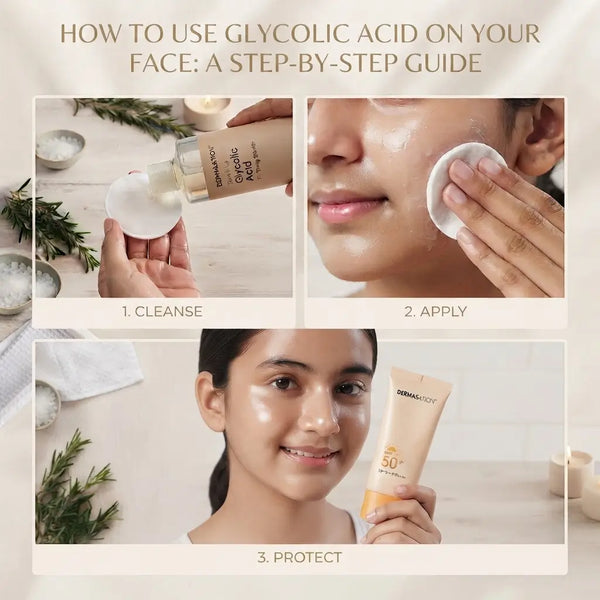
- Non-negotiable if you use Glycolic Acid or Retinol at night.
Frequently Asked Questions
Is sunblock the same as sunscreen?
Not technically. Sunblock refers to mineral, physical-blocking formulas. Sunscreen is the broader term covering both mineral and chemical formulas. Our products are true mineral sunblock.
What is the best sunblock in Pakistan with price in mind?
Our Hydrating Mineral Sunscreen SPF 50 and SPF 70 are priced at PKR 1,200 for 120ml — broad-spectrum mineral protection without import markup.
Is medicated sunblock better than a regular one?
Not necessarily. A gentle, non-comedogenic mineral sunblock is often better tolerated than a formula loaded with extra actives, especially for sensitive or acne-prone skin.
What is the best sunblock for oily skin in Pakistan?
A non-comedogenic, oil-free mineral formula — our SPF 50 sunblock is built specifically for this.
Can men and women use the same sunblock?
Yes. What matters is skin type, not gender — the same formula works for anyone with that skin type.
Where to Start
Explore our mineral sunblock range in the Sunscreen collection — SPF 50 for daily wear, SPF 70 for extended outdoor exposure. Pair either with the Glycolic Acid Toner in our Repair & Protect Bundles for a complete morning-and-evening routine.