Best Sunscreen for Oily Skin in Pakistan: How to Choose

In shortWhy sunscreen feels greasy on oily skin, what to look for, gel vs lotion, and how to reapply without shine. Plus why hydration reduces oil.
Most people with oily skin in Pakistan have tried sunscreen and given up. Not because they don't believe in it — because by 2pm their face looks like it's been fried, and reapplying feels absurd.
That's a texture problem, not a discipline problem. And it's solvable.
Why Sunscreen Feels So Bad on Oily Skin Here
Three things stack up.
Heat and humidity. Lahore and Karachi summers keep skin producing oil all day, and a heavy sunscreen sits on top of that rather than absorbing into it.
Formulas built for other climates. A sunscreen designed for a European market assumes cooler, drier conditions. The same formula behaves differently at 40°C with high humidity.
Applying too little, then over-blotting. People with oily skin instinctively use less to avoid shine — which cuts the actual protection dramatically, then leads to blotting that removes even more.
The result: a product that neither feels good nor protects properly.
The Thing Nobody Tells You About Oily Skin
Skin that's dehydrated produces more oil to compensate. Not more moisture — more oil.
So the standard oily-skin approach — stripping cleanser, mattifying everything, skip the moisturizer — often makes shine worse over a few weeks. The skin reads the dryness as a signal to produce more sebum.
This matters for sunscreen choice, because it means a hydrating formula frequently sits better through the day than an aggressively mattifying one. Counterintuitive, and it's the main reason people are surprised by which sunscreen finally works for them.
What to Actually Look For
Non-comedogenic
Formulated without ingredients known to block pores. Non-negotiable if you're acne-prone — a sunscreen that causes breakouts won't be worn, and a sunscreen that isn't worn protects nobody.
Broad-spectrum
The SPF number only describes UVB protection. UVA — which drives pigmentation and ageing, and passes through cloud and glass — needs the broad-spectrum label. Check for it.
A finish you can live with
Light, non-greasy, absorbs in under a minute. This sounds like a preference rather than a requirement, but it's the single strongest predictor of whether you'll still be wearing it in a month.
SPF 50 is plenty
SPF 50 blocks 98% of UVB. SPF 70 blocks 98.6%. The gap between them is far smaller than the gap between applying enough and applying too little — which is where most people actually lose protection.
Minimal white cast
On medium to deep South Asian skin tones this decides whether a sunscreen is wearable at all. Heavily mineral formulas are the usual culprits.
Gel, Lotion or Cream?
"Gel sunscreen" gets searched constantly by people with oily skin, and it's worth understanding what the label actually means.
Gel formulas are typically water or alcohol-based, absorb fastest, and feel lightest. The trade-off is that alcohol-heavy versions can be drying — which, as above, can drive more oil production over time.
Lightweight lotions sit between gel and cream. Slightly more substantial on application, but they hold up better through a long humid day and don't strip the skin.
Creams suit dry skin and generally feel too heavy on oily skin in this climate.
The honest answer is that the category label matters less than the specific formula. Plenty of "gel" sunscreens feel tacky, and plenty of lightweight lotions absorb faster than gels. Judge by finish, not by the word on the bottle.
How to Apply It Without the Shine
- Use enough. Roughly two finger-lengths for face and neck. Most people use a quarter of that, which turns an SPF 50 into something closer to an SPF 15.
- Moisturize first, then wait. Give it a minute to settle before applying sunscreen — layering onto damp product is what causes pilling.
- Press, don't rub. Rubbing until it disappears means you've rubbed most of it off.
- Blot, then reapply. Midday, blot the oil with tissue first, then reapply over the top. Adding sunscreen onto existing shine is what makes people give up.
- Don't skip moisturizer. It sounds wrong for oily skin. It isn't — dehydration is what drives the oil.
What We Make
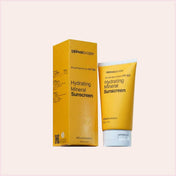
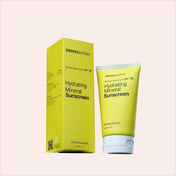
Both Dermasation sunscreens are non-comedogenic, broad-spectrum, hydrating rather than mattifying, and Rs. 1,200 for 120ml.
Hydrating Sunscreen SPF 50 blocks 98% of UVB and is the sensible daily choice for most people — office, commute, indoor-outdoor days.
Hydrating Sunscreen SPF 70 blocks 98.6% with added sweat resistance, for outdoor work, sport, or travel north where UV intensifies with altitude.
120ml matters more than it sounds. Small bottles encourage rationing, and rationing is the most common reason sunscreen underperforms.
Does Sunscreen Cause Acne?
A badly chosen one can. Heavy, occlusive formulas contribute to congestion on skin that's already prone to it.
But going without is worse for acne-prone skin specifically — UV darkens post-acne marks and makes them take far longer to fade. You end up clearing the breakout and keeping the mark for months.
Choose non-comedogenic and it's a non-issue.
Frequently Asked Questions
What is the best sunscreen for oily skin in Pakistan?
A lightweight, non-comedogenic, broad-spectrum SPF 50 you'll wear daily. Texture matters more than any single ingredient — the highest SPF you skip on humid days protects you less than an SPF 50 you apply every morning.
Should oily skin use gel or lotion sunscreen?
Either can work. Gels absorb fastest but alcohol-heavy versions can be drying, which drives more oil over time. Judge the specific formula's finish rather than the category.
Do I need sunscreen if I have acne?
Yes, and more than most. UV darkens post-acne marks significantly. Use a non-comedogenic formula.
How do I reapply without looking greasy?
Blot with tissue first, then reapply over the top. Don't add product onto existing oil.
Will sunscreen make my skin oilier?
A heavy one will feel that way. A hydrating, oil-free formula generally reduces shine over a few weeks by addressing the dehydration driving it.
Is SPF 50 enough for Pakistan?
For daily indoor-outdoor use, yes. UV Index reaches 10–12 in summer, and SPF 50 applied properly handles that. SPF 70 adds margin for extended outdoor exposure.
What about men's skin?
Same rules. Male skin tends to be oilier on average, so lightweight formulas suit most — but choose by how your skin behaves, not by the label on the bottle.
Read more: shop sunscreen · products for oily skin and open pores · why sunscreen matters for pigmentation