Sunscreen for Pigmentation: Why SPF Is the Wrong Number to Check
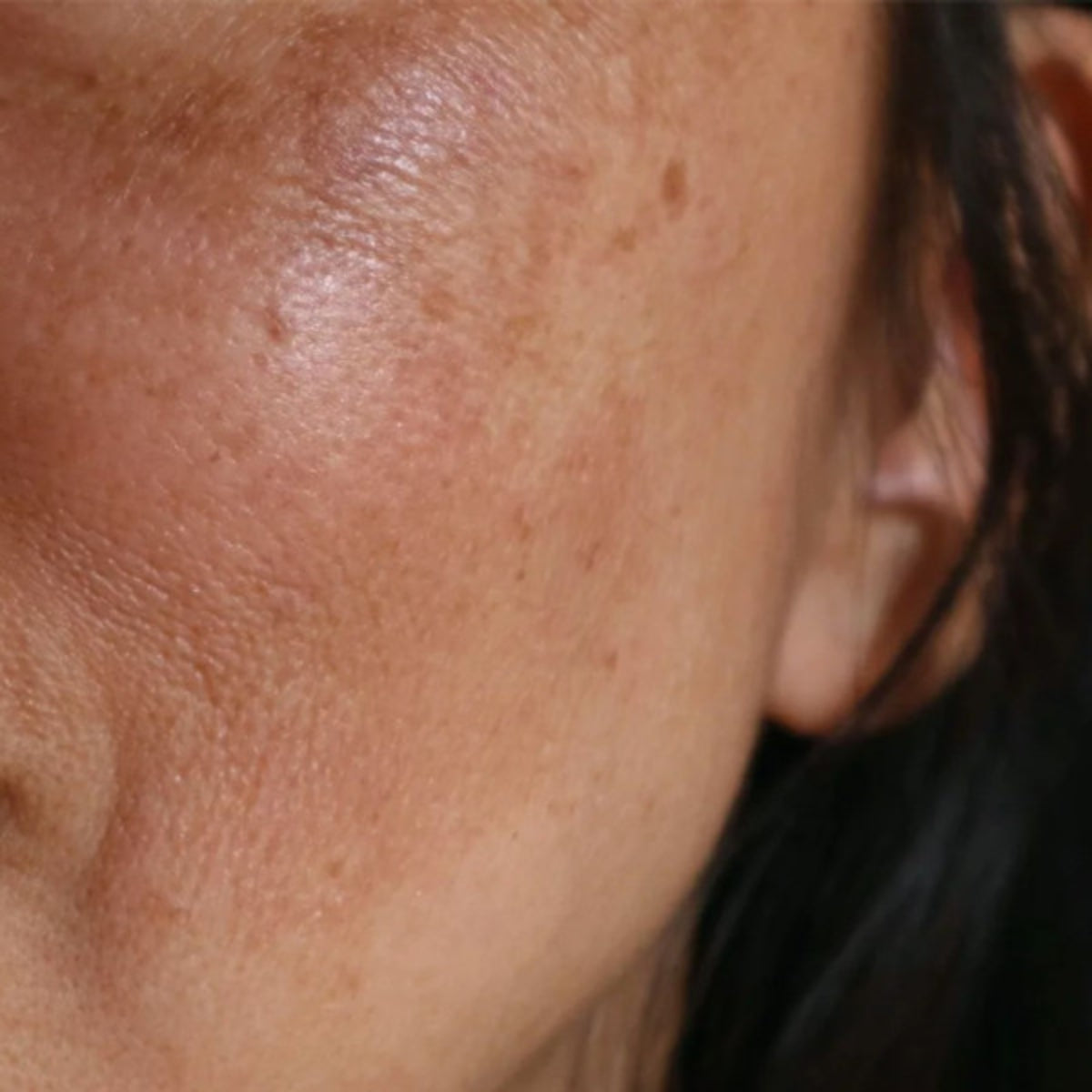
In shortWhy SPF is the wrong number to focus on for pigmentation, what to check instead, and how melasma differs from sun spots.
If you're treating dark spots or melasma, your sunscreen matters more than your serum. Most people pick one by SPF number — which, for pigmentation specifically, is close to the least important thing on the label.
Why SPF Is the Wrong Number to Focus On
SPF measures one thing: protection against UVB, the wavelength that causes sunburn.
Pigmentation is driven mainly by UVA. And UVA behaves differently in ways that matter here:
- It penetrates deeper into the skin, where melanin is produced
- It passes through cloud, so overcast days still count
- It passes through window glass — car windscreens, office windows
- Its intensity stays relatively constant through the day and across seasons, unlike UVB
So a sunscreen with an impressive SPF and weak UVA coverage will stop you burning while your dark spots quietly deepen. That's why broad-spectrum is the word to look for, not the number.
What to Actually Check
1. Broad-spectrum, stated clearly
This is the requirement. Without it you may be buying UVB-only protection, which does little for pigmentation.
2. SPF 50 is enough
SPF 50 blocks 98% of UVB, SPF 70 blocks 98.6%. That difference is trivial next to whether you apply enough and reapply. Don't pay a premium for a higher number at the cost of a smaller bottle.
3. A texture you'll wear daily
This is genuinely the deciding factor. Pigmentation treatment is a months-long project, and a sunscreen you skip on humid days breaks the chain. Light, non-greasy, non-comedogenic — whatever means you'll still be applying it in month three.
4. Enough volume to reapply
Small bottles encourage rationing. Rationing is the most common reason sunscreen underperforms.
The Amount Matters More Than the Product
Roughly two finger-lengths — squeezed along your index and middle finger — for face and neck together.
Most people use around a quarter of that, which turns an SPF 50 into roughly an SPF 15 in practice. You will get more protection from applying a moderate sunscreen properly than from applying an expensive one sparingly.
Reapply every two hours outdoors. Blot oil with tissue first, then apply over the top — adding product onto existing shine is why people give up on reapplication.
A Note on Melasma
Melasma behaves differently from sun spots and post-acne marks, and it's worth knowing why.
It's triggered by UV, but also by heat and visible light — including the light from screens and ordinary daylight that no conventional sunscreen filters. It's also hormonally driven, which is why it often appears during pregnancy or with hormonal contraception.
For visible light specifically, the current evidence points to tinted sunscreens containing iron oxides, which conventional untinted formulas don't provide. We don't currently make a tinted sunscreen — if melasma is your primary concern, that's worth knowing when you shop, alongside a conversation with a dermatologist.
For sun spots, post-acne marks and general uneven tone — which is most pigmentation — a good broad-spectrum sunscreen worn consistently does the job.
Where Sunscreen Sits in the Routine
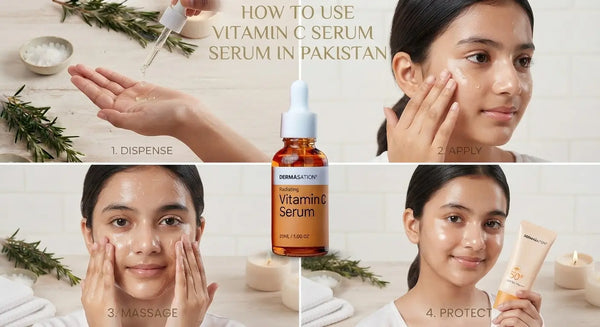
Last. Always last in the morning, after moisturizer, before makeup.
Morning: cleanse → vitamin C or niacinamide → moisturizer → sunscreen
Evening: cleanse → glycolic acid toner, two to four nights a week → moisturizer
Vitamin C in the morning is a useful partner rather than an alternative — it neutralises free radicals generated by the UV that gets through, which sunscreen doesn't do. But it protects nothing on its own.
What Happens If You Skip It
Plainly: your brightening routine fails.
UV deepens existing pigmentation faster than glycolic acid, kojic acid, alpha arbutin or vitamin C can fade it. Skip the sunscreen and you're removing pigment at night and generating more of it by day — paying for products that can't win.
Pakistan's UV Index reaches 10–12 through summer. This isn't a marginal effect here.
Our Sunscreens
Both broad-spectrum with full UVA coverage, non-comedogenic, and Rs. 1,200 for 120ml — around two months of daily use.
SPF 50 for daily wear, SPF 70 for extended outdoor exposure and sweat resistance. Both hydrating rather than mattifying, and formulated to minimise white cast on medium to deep skin tones.
Frequently Asked Questions
Which sunscreen is best for pigmentation?
A broad-spectrum one worn every day. UVA drives pigmentation and passes through cloud and glass, so consistent coverage matters far more than the SPF number.
Which sunblock is best for pigmentation in Pakistan?
Broad-spectrum SPF 50, in a bottle large enough that you won't ration it, with a texture light enough for local heat. Around Rs. 900–2,000 for a full size.
Do I need sunscreen indoors?
If you sit near a window, yes — UVA passes through glass. Away from windows, one morning application is generally enough.
Does sunscreen fade dark spots?
No, it prevents them worsening. Fading requires an active like glycolic acid or vitamin C. Sunscreen is what allows those actives to make progress.
Is SPF 30 enough for pigmentation?
SPF 30 blocks about 97% of UVB against SPF 50's 98%. Adequate if it's broad-spectrum and applied properly — but SPF 50 gives more margin for the under-application most people are guilty of.
Will pigmentation return if I stop?
Yes. Melanin production is a normal response to UV. Fading spots is achievable; keeping them faded is a matter of daily protection rather than continued treatment.
What about melasma?
Harder. It responds to heat and visible light as well as UV, and is often hormonal. Tinted sunscreens with iron oxides add visible-light protection, and persistent cases are worth discussing with a dermatologist.
General information, not medical advice.
Read more: pigmentation products · glycolic acid for dark spots · shop sunscreen