Retinol Serum: How to Start Without Irritating Your Skin
In shortHow retinol works, what the percentage means, how to start without irritation, and why a lower strength used consistently beats a stronger one abandoned.
Retinol has more evidence behind it than any other anti-ageing ingredient you can buy without a prescription. It also has the highest quit rate — and the two facts are connected.
Most people who give up don't have unsuitable skin. They started too strong, too often, and their skin reacted in week two.
What Retinol Actually Does
Retinol is a vitamin A derivative. Once absorbed, your skin converts it into retinoic acid — the form that does the work.
That conversion step explains a lot. Prescription tretinoin is retinoic acid, so it acts immediately and strongly. Retinol has to be converted first, which makes it gentler and slower. Same destination, different pace.
Once converted, it does two things:
- Accelerates cell turnover — which resurfaces texture, unclogs pores, and fades pigmentation. This shows up within weeks.
- Signals fibroblasts to produce collagen — which softens fine lines and improves firmness. This takes months.
The second is the reason retinol is worth the patience, and the reason it can't be rushed.
What the Percentage Means
Over-the-counter retinol runs from about 0.1% to 1%.
| Strength | What it means |
|---|---|
| 0.1–0.3% | Entry level. Effective, low irritation, slower results. |
| 0.5% | Mid-strength. Faster, needs an established tolerance. |
| 1% | Strong. Meaningful irritation risk for most people. |
Here's the part that gets skipped: a 0.2% serum used consistently for a year outperforms a 1% serum abandoned in week three. And abandoning it in week three is the most common outcome.
Higher isn't better if it stops you using it.
How to Start Without Wrecking Your Skin
Weeks 1–4: two evenings a week. A pea-sized amount on clean, dry skin. Avoid the immediate eye area and the corners of the nose and mouth, where skin is thinner.
Weeks 5–8: three evenings, if your skin has stayed comfortable.
After two months: most people settle at three or four. Nightly use isn't a goal, and there's no prize for reaching it.
Always follow with moisturizer. If your skin is sensitive, try the sandwich method — moisturizer first, then retinol, then moisturizer again. It slows absorption and reduces irritation without eliminating the benefit.
The Rules That Don't Bend
- Evening only. Retinol degrades in light and increases UV sensitivity.
- Sunscreen every morning. Non-negotiable — UV breaks down collagen faster than retinol builds it, so skipping SPF means running backwards.
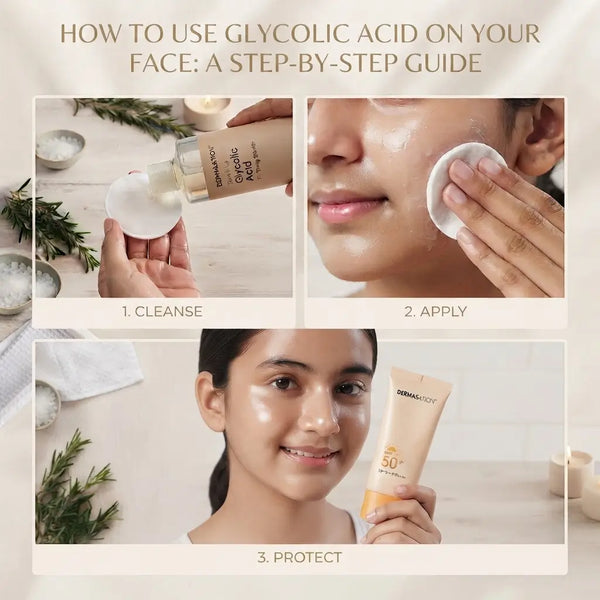
- Never the same night as glycolic acid. Alternate them.
- Not during pregnancy or breastfeeding. See below.
Pregnancy
Do not use retinol if you are pregnant, planning a pregnancy, or breastfeeding. Vitamin A derivatives aren't recommended during pregnancy at any concentration.
Niacinamide and vitamin C are widely considered suitable alternatives for tone and texture — but confirm with your doctor rather than relying on a product page.
What's Normal and What Isn't
Normal in the first few weeks: mild dryness, light flaking, a temporary increase in breakouts as turnover speeds up. At lower concentrations, many people notice nothing at all — which is also normal, not a sign it isn't working.
Not normal: persistent stinging, redness lasting more than an hour, peeling in sheets, or skin that suddenly reacts to products it handled fine before.
If you recognise the second list, stop for a week, simplify to cleanser and moisturizer, then restart at half the frequency.
Purging vs irritation
Purging appears where you normally break out, clears faster than usual, and improves by week six. Irritation appears in new places, comes with redness or stinging, and keeps worsening.
If it's still deteriorating past week six, it's not purging.
What to Pair It With
| Pairing | Verdict |
|---|---|
| Niacinamide | Excellent — buffers retinol irritation |
| Hyaluronic acid | Excellent — offsets retinol dryness |
| Ceramide moisturizer | Essential — not optional |
| Vitamin C | Separate — C in the morning, retinol at night |
| Glycolic acid | Alternate nights, never together |
| Physical scrubs | Avoid on retinol nights |
Realistic Timeline
| Timeline | What happens |
|---|---|
| Weeks 1–4 | Adjustment. Possible dryness. Often nothing visible. |
| Weeks 4–8 | Texture smoother, tone more even |
| Months 2–4 | Fine lines soften |
| Month 4+ | Collagen benefits accumulate |
Retinol is a long-term product. If you're looking for visible change in a fortnight, this isn't the ingredient — and anything promising that is describing hydration, not collagen.
What We Make
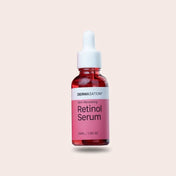
The Skin Renewing Retinol Serum is formulated at 0.2% — deliberately toward the gentler end. Rs. 1,720 for 30ml, which lasts around three months at two to four evenings a week.
Locally made 0.2–0.5% retinol serums generally run Rs. 1,500–3,000 for 30ml in Pakistan. Imported equivalents typically cost two to three times more.
Frequently Asked Questions
What is the best retinol serum in Pakistan for a beginner?
A lower concentration used consistently — 0.1% to 0.3%. Starting slow matters more than the brand, because the people who succeed with retinol are the ones still using it in month six.
What is the retinol serum price in Pakistan?
Roughly Rs. 1,500–3,000 for a locally made 30ml serum. Imported options cost two to three times more. Ours is Rs. 1,720.
What are the benefits of retinol serum?
Collagen stimulation, faster cell turnover, smoother texture, softer fine lines, fewer blackheads, and gradual fading of pigmentation. Results build over two to four months.
How do I use retinol serum?
A pea-sized amount on clean, dry skin in the evening, twice a week to start, always followed by moisturizer. Never in the morning.
What are the side effects?
Dryness, flaking and mild sensitivity early on. Persistent stinging or peeling means you're using it too often — reduce frequency rather than pushing through.
Is retinol safe during pregnancy?
No. Vitamin A derivatives aren't recommended in pregnancy or while breastfeeding at any strength.
Retinol or retinoid — what's the difference?
"Retinoid" is the category; retinol is one member. Prescription tretinoin is retinoic acid and acts directly. Retinol converts to it in the skin, which makes it gentler and slower.
At what age should I start?
Collagen decline begins in the mid-twenties, so late twenties onward is reasonable. Daily sunscreen matters at any age and prevents more visible ageing than retinol reverses.
Can I use retinol on acne?
It helps with blackheads and texture over months, but it isn't a fast acne treatment. For active breakouts, a salicylic acid cleanser works faster.
I don't feel anything — is it working?
Probably. Irritation isn't a measure of effectiveness. At lower concentrations many people have no visible adjustment period while results still build.
General information, not medical advice.
Read more: how retinol works · shop serums · niacinamide serum guide