The Best Sunscreen for Brown Skin That Doesn't Leave a White Cast

In shortWhy sunscreen leaves a white cast on brown skin, which formulas avoid it, and how to choose broad-spectrum protection that disappears into deeper skin tones.
\"Your sunscreen should protect your skin, not change its color.\"
For years it seemed like there was no sunscreen suitable for brown skin that didn't leave a chalky white film. Older formulas sat on the surface and gave skin an ashy, grey look — which made wearing them daily feel like a trade-off nobody should have to make.
Formulation has moved on. A well-made broad-spectrum sunscreen can now offer strong protection and still disappear into deeper skin tones.
If you've struggled to find one that doesn't dull your natural colour, here's what to know.
Why Brown Skin Still Needs Daily Sun Protection
One of the most persistent skincare myths is that darker skin tones don't need sunscreen. Melanin does provide some natural defence against UV, but it isn't enough to prevent sun damage.
Without daily protection, brown skin is still subject to:
- Hyperpigmentation and dark spots
- Uneven skin tone
- Premature aging
- Fine lines and wrinkles
- Long-term UV damage
In fact, pigmentation is often the bigger concern on deeper skin tones than burning is. Melanin-rich skin responds to UV by producing more pigment, which is exactly how sun exposure deepens existing dark spots and makes them slower to fade.
The White Cast Problem: Why It Actually Happens
This is worth understanding properly, because the usual explanation gets it backwards.
White cast comes from mineral filters — zinc oxide and titanium dioxide. These work by sitting on the surface of the skin and reflecting UV away. That surface layer is the protection, and it's also the residue. On fair skin it's barely visible. On brown skin it reads as grey or ashy.
Chemical filters work differently: they absorb into the skin and convert UV into heat. Because there's nothing sitting on the surface, there's nothing to reflect visible light either — which is why these formulas generally disappear on deeper skin tones.
So if a white cast is your main complaint, the answer isn't a better mineral sunscreen. It's a formula built to absorb rather than sit on top.
The practical test: check the active filters on the ingredient list. If you see zinc oxide or titanium dioxide high up, expect some cast. If you don't, you probably won't get one.
What to Look For Instead
Rather than chasing a filter type, judge a sunscreen on four things.
Broad-spectrum protection
Make sure it covers both UVA and UVB. UVA is the one driving pigmentation and aging, and a product that only states an SPF number is telling you about UVB alone.
An invisible finish
Look for formulas designed to absorb. Swatch it on your jawline rather than the back of your hand, which is usually a different shade from your face.
Hydrating ingredients
A good sunscreen shouldn't compromise barrier function. Skin that feels tight by midday is a sign the formula is drying, and dry skin on deeper tones looks ashy for an entirely different reason.
Daily-wear comfort
The best sunscreen is the one you'll use consistently. Favour lightweight, non-greasy textures that are easy to apply and pleasant to reapply.
SPF 50 or SPF 70: Which Fits Your Lifestyle?
\"The best sunscreen is the one you'll actually want to wear every day.\"
SPF 50
Our Hydrating Sunscreen SPF 50 blocks roughly 98% of UVB and suits normal daily use — commuting, errands, general time outdoors.
- High daily protection
- Lightweight wear
- Broad-spectrum and non-comedogenic
- Suitable year-round
SPF 70
For longer stretches outside, the Hydrating Sunscreen SPF 70 adds a margin of protection, with added sweat resistance.
Particularly useful for:
- Outdoor sports
- Beach days
- Hiking and outdoor work
- Extended sun exposure
Both are Rs. 1,200 for 120ML, so the choice is about your day rather than your budget. And be realistic about the gap: SPF 50 blocks 98% of UVB, SPF 70 blocks 98.6%. The difference between them is far smaller than the difference between applying enough and applying too little.
How to Avoid White Cast and Get a Natural Finish
Even with the right formula, application decides the result:
- Apply in thin, even layers rather than one thick one
- Let your moisturizer absorb fully first
- Work it in properly instead of leaving it sitting on the surface
- Give it a few minutes before applying makeup
- Reapply every two to three hours when you're outdoors
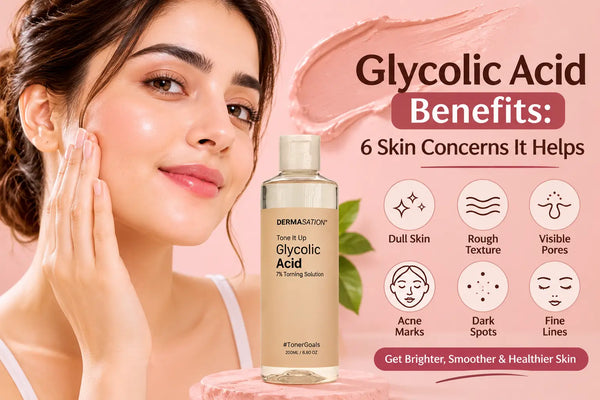
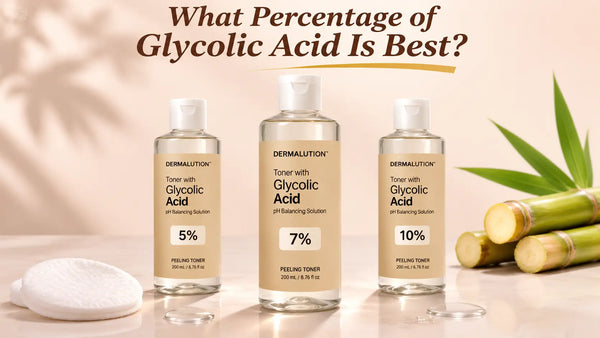
One more thing worth knowing: if you use glycolic acid for dark spots, sunscreen stops being optional. Exfoliating acids increase UV sensitivity, and skipping SPF while using them can deepen the pigmentation you're trying to fade.
The Bottom Line
Sun protection on brown skin shouldn't involve a compromise between protection and appearance. What you want is broad-spectrum coverage, a texture that absorbs rather than sits, and hydration that keeps skin comfortable through the day.
Get those three right and the sunscreen simply disappears — which is the point.
Read more: sunscreen prices compared · sunscreen for pigmentation · shop sunscreen